Quick answer: Suzuki and Yamaha both build reliable four-stroke outboards, so no brand wins outright. Suzuki has the longer standard US warranty: 5 years for recreational use, versus Yamaha’s 3 years. Yamaha offers paid extended coverage. Pick the brand with the best local dealer, the right model for your boat, and the better out-the-door quote.
Outboard motors have changed the marine industry. They have made every kind of boating easier and more fun.
Many brands sell outboard engines today. Suzuki and Yamaha are two of the best known, and boaters often debate which one is better.
Both Suzuki and Yamaha are Japanese brands, and both are major names in the US market. Mercury is their main US rival. Evinrude is no longer a choice for a new engine, because BRP stopped making Evinrude outboards in May 2020.
Below, we compare these two brands on reliability, performance, noise, warranty, price, service and maintenance.
Comparison Chart – Suzuki vs. Yamaha Outboard
| Suzuki Outboard | Yamaha Outboard |
| Reliable outboard engine with a strong reputation | Reliable outboard engine with a strong reputation |
| Speed depends on the model, prop and boat | Speed depends on the model, prop and boat |
| Owners often describe the engines as quiet; no independent data confirms it beats every rival | Noise varies by model and rpm; compare at a dealer demo |
| Follow the owner’s manual schedule | Published schedule: 20 hours first, then every 100 hours or yearly |
| The looks and shapes stand out | Looks are good and a bit curvier |
| Standard warranty: 5 years (non-commercial use) | Standard warranty: 3 years; up to 6 years total with Y.E.S. on four-strokes |
| Price varies by model and dealer; get a written quote | Price varies by model and dealer; get a written quote |
In-depth Discussion – Suzuki vs. Yamaha Outboard:
The chart above shows the quick differences between Suzuki and Yamaha engines. Now let’s look at each point in more detail.
Which Is More Reliable, Suzuki or Yamaha?
Neither brand is clearly more reliable. Both have long track records with US boaters. How well you maintain the engine and how well it matches your boat matter more than the badge on the cowling.
Let’s skip the flashy numbers and talk like regular anglers. Reliability is the most important thing in an outboard. But what does it mean?
For most owners, it means the engine fits the boat’s weight and capacity, starts every time, and gets everyone home safely. By that measure, there is no loser between Suzuki and Yamaha. Both have done this job well for years.
Some owners favor Suzuki and some favor Yamaha. No independent data we could verify shows one brand failing less often than the other. So treat any “Brand X is more reliable” claim as opinion.
On performance, both companies build modern four-strokes across a wide range of horsepower. Both deliver strong overall performance when the engine is sized and propped correctly for the boat.
Which Outboard Brand Is the Most Reliable?
Mercury, Suzuki and Yamaha are the main outboard brands most US boaters compare. All three are widely used. The most reliable choice for you is the one that is sized right, serviced on schedule, and backed by a good dealer near where you boat.
Does Evinrude Still Make Outboards?
No. BRP stopped making Evinrude E-TEC and E-TEC G2 outboards on May 27, 2020. The move affected 650 employees. BRP signed a deal with Mercury Marine to supply engines for its boat brands.
BRP said it would keep supplying service parts and honor existing Evinrude limited warranties. If you own an Evinrude, you can still get parts. If you are buying new, your choice is mainly between Suzuki, Yamaha and Mercury.
Gear Case and Appearance
The gear case deals with heat, impact and load, and it has to suit the hull. Some owners say their Suzuki gear cases needed less service than their Yamaha units. Others report the opposite. We found no verified data that settles it, so call this one a draw.
Gear case life depends a lot on use. Hitting sand bars, running with low or old gear oil, and skipping water checks wear any lower unit faster.
Now for appearance. Looks have nothing to do with engine performance.
But if you like a sharp look, you may love how Suzuki engines look.
Many Suzuki engines come in a black matte finish with different top colors. Some higher-horsepower models have a red top finish. White versions with different accent colors are also offered.
Yamaha engines have a slightly curvier shape than Suzuki. Many come in black or gray.
White is also available on some models. Owners like both brands’ designs and color choices. There is no clear winner here.
Speed and Charging
Neither brand is faster across the board. Top speed depends on the model, horsepower, propeller, hull and load.
Speed matters for a good day on the water, whether you race or cruise with family. Both brands build engines that can deliver it. A Suzuki and a Yamaha of the same horsepower on the same boat can run close. The right prop often makes a bigger difference than the brand.
Charging is the other half of this topic. The engine’s alternator keeps your batteries charged while you run. Its output varies by model, not just by brand.
If you run a trolling motor, big electronics, livewells or a stereo, check the alternator output on the spec sheet of each model you are comparing. Make sure it covers what your boat draws. Ask the dealer how much of that output is available at idle and trolling speed, since many boats spend hours there.
Are Suzuki Outboards Quieter Than Yamaha?
Many owners describe Suzuki engines as quiet and smooth. But we found no independent test showing Suzuki is quieter than Yamaha or every other brand. Noise depends on the model, rpm, mounting and hull.
Loud engine noise can ruin a perfect day on the water. Constant noise can wear on you and your passengers. If a quiet ride matters to you, noise should be on your checklist.
Both brands’ four-strokes run much quieter than older two-stroke engines. Any engine gets louder as you add throttle.
The best test is your own ears. Ask a dealer for a demo ride, or listen to both brands on similar boats at idle, at cruise and at wide open throttle.
Which Has Better Fuel Economy?
No brand wins on fuel economy in every case. Fuel burn depends on horsepower, boat weight, hull type, prop and the speed you cruise at.
To compare fairly, follow these steps:
- Compare engines of the same horsepower.
- Look for test data on the same or a similar boat, not just a different hull.
- Focus on gallons per hour and miles per gallon at your normal cruise speed, not at top speed.
- Make sure each engine is propped correctly. A wrong prop can waste more fuel than any brand difference.
Many modern outboards can show fuel flow on a gauge or display. Once you own the engine, use it to find your boat’s most efficient cruise rpm.
Propping and Assembly
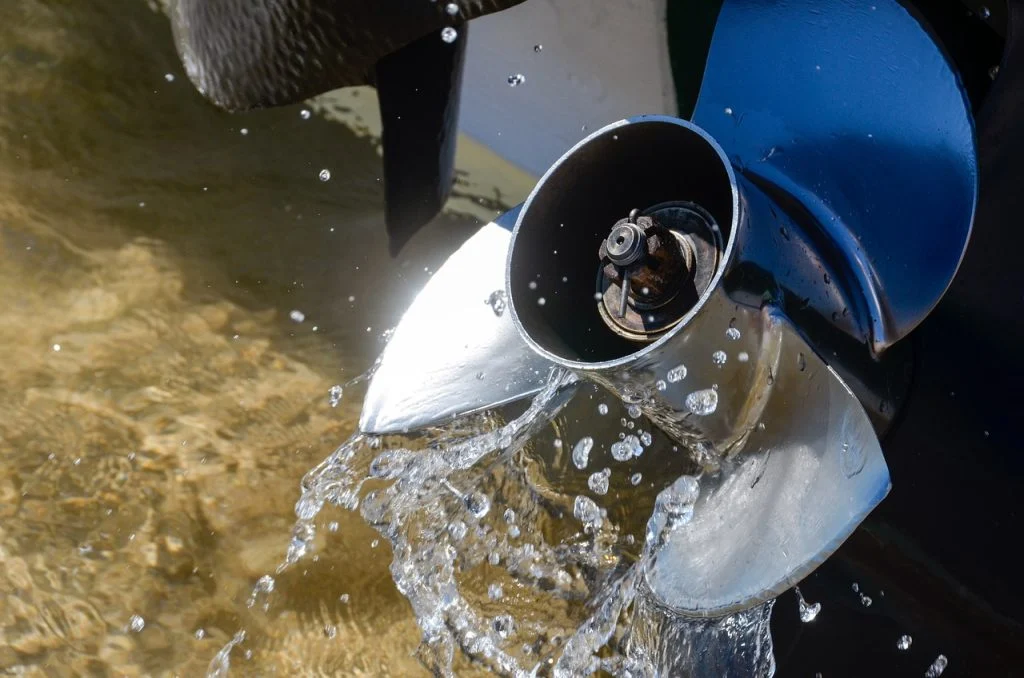
Props and lower-unit parts take a lot of stress, from the propeller to the case. Both Yamaha and Suzuki use quality materials. Some owners prefer Yamaha’s props and lower-unit parts. We found no verified data showing one brand’s parts last longer.
What matters most is choosing the right prop for your boat. The right pitch and diameter affect speed, hole shot and fuel use. A good dealer can help you test props.
Now for working on the engine yourself. You can’t always take your outboard to a service shop.
You may need to do small jobs on your own, like changing a spark plug, fuel filter or gear oil. If you are not a pro, easy access to these parts matters.
Some owners say Suzuki engines are easier to understand and work on. Others find Yamaha easy too. Ease of access depends more on the specific model than the brand.
Before you buy, ask the dealer to pop the cowling. Check how easy it is to reach the oil filter, fuel filter, dipstick and spark plugs. Also check whether a service manual is available for that model.
Keep in mind that modern outboards have complex electronics. For major repairs, a certified dealer is the safer choice. Unapproved repairs can also cause trouble with warranty claims.
Warranty and Price Value
Suzuki has the longer standard warranty. Yamaha lets you buy extended coverage that can reach six years total on a four-stroke.
Price is harder to compare. We found no verified data showing one brand is always cheaper. Prices change by model, horsepower, dealer, region and rigging.
How Long Is the Suzuki Outboard Warranty?
Suzuki’s standard US warranty on a new outboard is a 5-year limited warranty for non-commercial (recreational) use. Coverage is shorter for other uses:
- Commercial use: 1 year.
- Rental or boat-club use: 3 years (since July 1, 2024).
Suzuki has also run 7-year promotional warranties on 150 hp and larger pleasure-use models. Those offers ended March 31 and July 31, 2026. We found no current 7-year offer as of November 2026. Ask your dealer whether a new promotion is running before you buy.
How Long Is the Yamaha Outboard Warranty?
Yamaha outboards come with a standard 3-year warranty. Some newer models carry a 5-year warranty.
You can add Yamaha Extended Service (Y.E.S.) in 12-, 24- or 36-month plans. Yamaha says a four-stroke with 36 months of Y.E.S. gets six years of total coverage.
To check how much warranty an engine has left, call Yamaha at (866) 894-1626 with the engine’s PID number. This is handy when you buy a used Yamaha.
| Warranty point | Suzuki (US) | Yamaha (US) |
|---|---|---|
| Standard recreational coverage | 5 years | 3 years (5 years on some newer models) |
| Commercial use | 1 year | Check with Yamaha or your dealer |
| Rental or boat-club use | 3 years (since July 1, 2024) | Check with Yamaha or your dealer |
| Extended or promo coverage | 7-year promos on 150 hp+ ran in 2026; none found as of November 2026 | Y.E.S. plans of 12, 24 or 36 months; up to 6 years total on four-strokes |
Is Suzuki Cheaper Than Yamaha?
Sometimes, but not always. Many boaters see Suzuki as the better value, but we could not verify a fixed price gap between the brands. Quotes vary a lot.
To get a fair comparison:
- Ask for written out-the-door quotes for the same horsepower.
- Make sure both quotes include the same rigging: controls, gauges or display, prop and installation.
- Add the cost of any extended warranty you plan to buy.
- Compare the value of the warranty you get, not just the sticker price.
How Do Dealer Networks, Parts and Resale Compare?
For most owners, the dealer matters more than the brand. A great engine with no dealer nearby means long waits for service and parts.
Both Suzuki and Yamaha have dealer locators on their websites. Before you buy, check:
- How many certified dealers are within driving distance of your home and where you boat.
- How long their service wait is during peak season.
- Whether they stock common parts like filters, impellers and anodes for your model.
- Whether they can handle warranty work on the engine you are buying.
Resale value depends on condition, hours, service records and local demand. A brand that is popular in your area is usually easier to sell. Keep every service receipt. A full maintenance history and remaining warranty coverage can help when you sell the boat.
Long-term cost also includes routine service. Ask each dealer what a typical 100-hour or annual service costs for the model you are considering.
How Often Should an Outboard Motor Be Serviced?
Service a new outboard after the first 20 hours, then every 100 hours or once a year, whichever comes first. That is Yamaha’s published maintenance schedule. Waiting 1,000 hours between checks is far too long for any outboard.
Yamaha’s schedule looks like this:
| When | What to do |
|---|---|
| After each use | Flush the engine, especially in salt or brackish water |
| First 20 hours (or 3 months) on a new engine | First service |
| Every 50 hours | Scheduled checks |
| Every 100 hours or once a year, whichever comes first | Regular service |
| Severe use (saltwater, long trolling) | Service twice as often |
For a Suzuki, follow the schedule in your owner’s manual. Ask your dealer to walk you through the break-in and first-service intervals for your model. Following the schedule also helps protect your warranty.
One more point: no outboard is corrosion-free. Yamaha uses corrosion-resistant materials and coatings, but it still tells owners to flush after each use and stick to the schedule. The same care applies to Suzuki or any other brand, especially in salt water.
Suzuki or Yamaha Outboard – Which one to choose?
Choosing between Suzuki and Yamaha is not too hard once you know what matters to you.
Each brand has strengths. Both engines work well when they fit the boat and get regular care.
If a longer standard warranty and a simple design matter most, Suzuki is a strong pick. Its 5-year recreational warranty is longer than Yamaha’s standard 3 years.
If you want the option of buying extended coverage, or a Yamaha dealer is closer to you, Yamaha is a strong pick.
Use this table to decide what to focus on for your type of boat:
| Boat type or use | What to prioritize | Decision rule |
|---|---|---|
| Bass boat | Hole shot, top speed, prop choice, engine weight | Compare both on the same hull with the right prop; pick the better local dealer |
| Offshore or saltwater | Corrosion care, warranty length, dealer support at the coast | Favor the brand with strong coastal service; budget for twice-as-often service under severe use |
| Pontoon | Low-speed thrust, quiet running, ease of use | Demo both at cruise speed; choose the one that feels and sounds best to you |
| Kicker or small tiller engine | Weight, easy starting, simple service | Lift and handle both in the showroom; check parts availability |
| Rental or boat club | Commercial or rental warranty terms | Get the written warranty for your use type; Suzuki rental use gets 3 years |
For a model-level look at the big engines, see our Suzuki 300 vs Yamaha 300 outboard comparison.
Before you buy, list what you need. Match those needs with what each engine offers. That way you will get the best one for your boat.
Final Words
That wraps up our Suzuki vs. Yamaha outboard comparison. You now have what you need to pick the right engine for your boat.
Remember, buying a good outboard is only half the job. Service it on schedule: after the first 20 hours, then every 100 hours or once a year, whichever comes first. Flush it after each use, especially in salt water.
Also do a quick check before every trip. Look for fuel leaks, smell for fuel, check the fuel line and kill switch lanyard, and confirm water is coming out of the tell-tale once the engine starts. Best wishes with your new outboard!
Related Posts:
- Low Compression in One Cylinder Outboard: Cause and Fix
- Suzuki 300 vs yamaha 300 outboard: (Detailed Comparison)
- 4 Most Common Problems With Evinrude G2 Outboard Motors
- Common Problems With Suzuki 115 Four Stroke outboard Motor
- 4 Most Common Problems With Tohatsu Outboards
Frequently Asked Questions
Is a Suzuki or Yamaha outboard faster?
Neither brand is faster across the board. Top speed depends on the model, horsepower, propeller, hull and load. A Suzuki and a Yamaha of the same horsepower on the same boat can run close. The right prop pitch and diameter often make a bigger difference than the brand.
Which is better for saltwater, Suzuki or Yamaha?
Neither brand is corrosion-free, so the better choice is the one with strong service support near the coast. Compare warranty length and coastal dealer access. Flush the engine with fresh water after each use. Under severe use like saltwater, plan to service it twice as often.
Can I do basic outboard maintenance myself?
Yes, you can handle small jobs like changing a spark plug, fuel filter or gear oil. Before buying, ask the dealer to open the cowling so you can check access to filters, the dipstick and plugs. For major repairs, use a certified dealer, since unapproved work can affect warranty claims.
How do I check if an outboard’s alternator is big enough?
Check the alternator output on each model’s spec sheet and make sure it covers what your boat draws. Trolling motors, large electronics, livewells and stereos all add load. Ask the dealer how much output is available at idle and trolling speed, since many boats spend hours there.
What should I check on my outboard before each trip?
Do a quick check before every trip. Look for fuel leaks and smell for fuel. Inspect the fuel line and make sure the kill switch lanyard works. Once the engine starts, confirm water is coming out of the tell-tale, which shows the cooling system is pumping.