
Quick answer: Yes. The Suzuki DF150 is a well-regarded 150 hp four-stroke. It uses a 2.9-liter inline four with a maintenance-free timing chain, runs on 87-octane fuel, and needs oil service every 100 hours or 12 months after a 20-hour first change. Its reliability depends most on maintenance, flushing and local dealer support.
Here is a little-known fact. Suzuki Marine, a worldwide firm, has designed and built marine outboard motors since 1965.
Its skill with outboard engines comes from its background in building cars and motorcycles.
Suzuki has come a long way since it launched its first outboard. Today it is known for advanced technology and engineering in the marine industry.
How Good Are Suzuki 150 Outboards?
Suzuki’s outboards are not as well-known as some other brands. They have been closing the gap with the competition in the marine market.
Suzuki has been in the business since 1965, when it introduced the D55, a single-cylinder two-stroke boat motor.
Outboard engines are now very safe, dependable, long-lasting and easy to use. Big technical gains over the past few decades show up in better power-to-weight ratios.
Those gains are easy to see in modern four-stroke outboards in particular. They deliver stronger torque and smoother power than older designs.
What Are the Suzuki DF150A Specs?
The current Suzuki 150 is the DF150A, which shares its platform with the DF175A. These are the key specs from Suzuki’s official DF175A/DF150A page and Suzuki Australia’s DF150AP listing.
| Spec | Suzuki DF150A / DF150AP |
|---|---|
| Engine type | Inline four-cylinder, DOHC four-stroke |
| Displacement | 2,867 cc (174.9 cu in) |
| Compression ratio | 10.2:1 |
| Fuel | Regular 87-octane |
| Fuel system | Multi-point sequential electronic fuel injection with Suzuki Lean Burn control |
| Valve timing drive | Self-adjusting, maintenance-free timing chain |
| Gear ratio | 2.50:1, two-stage gear reduction |
| Driveshaft | Offset driveshaft |
| Shaft lengths | 20 in (508 mm, L) and 25 in (635 mm, X) |
| Weight (Suzuki Australia) | About 235 kg / 518 lb (L) and 240 kg / 529 lb (X) |
Weight can differ by market and by version. Confirm the exact figure for your model with a US dealer before you rig a boat.
How Reliable Are Suzuki 150 Outboards?
Suzuki is one of the longest-running Japanese makers of engines and machines.
Its anti-corrosion coating is designed to improve engine durability. It protects the aluminum outer parts that are often exposed to seawater.
The finish is applied directly to the outboard’s aluminum alloy. This gives the paint a strong bond to the aluminum surface.
An epoxy primer undercoat, a black metallic finish and a clear acrylic finish are layered on top. Together they form a solid corrosion treatment.
The fuel injection system is well proven. There is a single, easy-to-reach fuel filter. You can check it for water at the same time you check the oil.
The DF150 uses a self-adjusting timing chain, not a timing belt. That removes a common wear item from the service list.
Basic servicing is simple. Jobs like water pump service and valve checks need only standard tools.
Does the Suzuki DF150 Have a Timing Belt or Timing Chain?
The DF150 and DF150A use a timing chain. Suzuki describes it as self-adjusting and maintenance-free, and the chain runs in oil. This matters to owners because there is no scheduled belt replacement. Clean oil, changed on time, is what keeps the chain and its tensioner healthy.
How Durable Are Suzuki 150 Outboards?
The Global Suzuki website shows how far its motors have come and how the company got where it is now.
Suzuki is not as famous for outboards as some rivals. Still, many owners who use them often speak well of them.
Suzuki has grown in popularity because it builds quality, dependable engines at a fair price.
Many boaters count Suzuki among the most dependable four-stroke outboard brands on the market.
The DF150A has an offset driveshaft for better balance and less vibration, two-stage gear reduction, a self-adjusting, maintenance-free timing chain, multi-point sequential EFI, and Suzuki’s “Lean Burn” control system for better fuel economy and performance.
What Is the Difference Between the DF150A, DF150AP and DF150W?
The short answer: the DF150A uses mechanical controls, while the DF150AP uses Suzuki’s digital Precision Control. The DF150W is a separate model listed on Suzuki’s global site. Here is how they compare based on verified information.
| Model | Controls | Best fit |
|---|---|---|
| DF150A | Mechanical (cable) throttle and shift | Simpler rigging, often easier to repower an older boat that already has cable controls |
| DF150AP | Digital Precision Control (drive-by-wire) | Owners who want smooth electronic shifting and throttle, or a newer rigging setup |
| DF150W | Check Suzuki’s spec page | A separate model; confirm specs and US availability with a dealer |
Decision rule: if your boat already has good mechanical controls, the DF150A usually keeps rigging simple. If you are rigging a new boat or want electronic controls, look at the DF150AP. Both share the same core engine.
Some sellers describe the DF150W as set up for larger props and a lower gear ratio for a quicker holeshot. Suzuki’s published specs do not confirm this here, so check the official DF150W page and ask a dealer before buying for that reason.
How Many Hours Will a Suzuki 150 Outboard Last?
A common rule of thumb for modern four-stroke outboards, Suzuki included, is roughly 1,500 to 2,000 hours of run time. Treat this as a rough guide, not a promise. Many engines go well past it with good care, and neglected engines can fail much sooner.
Use your own hours to estimate life. At 200 hours per year, a 1,500 to 2,000 hour engine lasts about 7.5 to 10 years. Many recreational boaters run far fewer hours than that, so the engine may last longer in calendar years.
Suzuki outboard motors are also known for being dependable and easy to use. It is common to see forum posts from owners who report many more hours of trouble-free use.
Following the official oil change schedule and flushing the engine with fresh water after use will help your outboard last 10 years or more.
How Often Should You Change the Oil in a Suzuki 150 Outboard?
Change the oil at 20 hours for the first service. After that, change the oil and filter every 100 hours or 12 months, whichever comes first. Suzuki’s outboard warning system flags the 20-hour first change, according to Suzuki Marine’s FAQ. Some Suzuki materials list 100 hours or 6 months, so check the owner’s manual for your exact model.
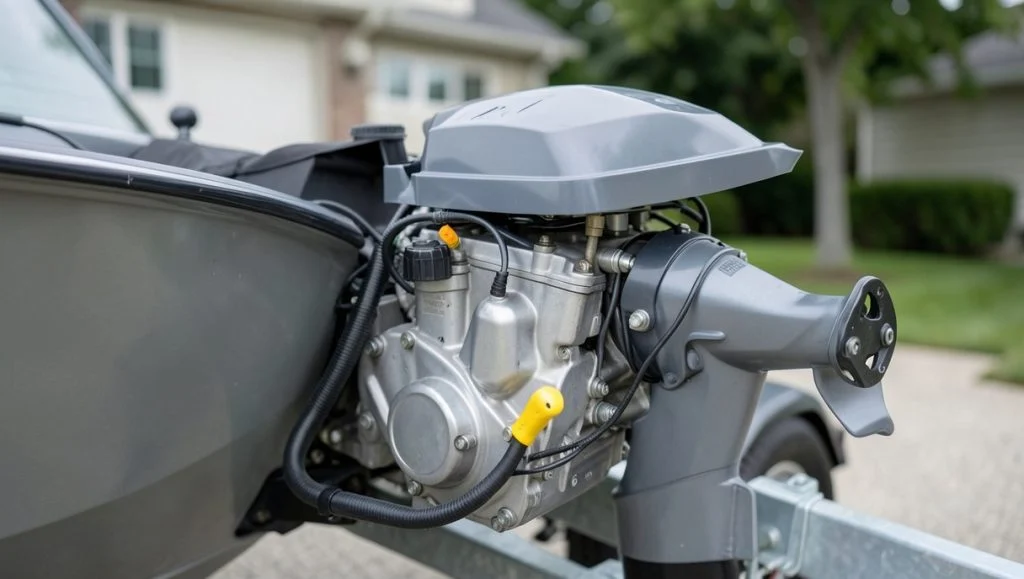
A simple maintenance plan looks like this:
- First service at 20 hours: change the oil and have the engine checked.
- Every 100 hours or 12 months: change the oil and oil filter. Follow your manual for the full list of checks at this interval.
- After every trip: flush with fresh water, especially after saltwater use.
- Each time you check the oil: look at the fuel filter for water.
- Timing chain: no scheduled replacement, but it depends on clean oil.
Is Suzuki Better Than Yamaha, Mercury or Honda for a 150 HP Outboard?
None of the four is clearly “best” for every boat. The Suzuki DF150, Yamaha F150, Mercury 150 FourStroke and Honda BF150 are all mainstream 150 hp four-strokes. For most buyers, the right choice depends more on local service, price and rigging than on brand.
Use these decision rules when comparing them:
| Factor | What to check | Why it matters |
|---|---|---|
| Dealer near you | Distance to a certified dealer for each brand | Warranty work and repairs are easier with a nearby shop |
| Rigging | Whether your boat’s controls and gauges match the brand | Switching brands can mean new controls, cables or wiring |
| Weight | Each engine’s published weight vs your boat’s rating | Too much weight on the transom affects trim and handling |
| Out-the-door price | Written quotes including rigging and prop | List prices rarely match the real installed cost |
| Warranty | Length and terms in writing | Coverage and promotions vary by brand and dealer |
| Fuel and service needs | Octane, oil interval, timing belt or chain | The Suzuki runs on 87-octane and uses a timing chain |
Rule of thumb: if two brands are close on price, pick the one with the best dealer near where you boat.
How Much Does a New Suzuki 150 Outboard Cost?
Prices change often and differ by dealer, region, shaft length and control type. The DF150AP with digital controls and a 25 in shaft will usually not price the same as a DF150A with a 20 in shaft. Get written quotes from more than one dealer.
When you compare quotes, ask what is included:
- Controls, cables or digital rigging
- Propeller
- Gauges and wiring harness
- Installation labor and removal of the old engine
- Warranty length and any current extended-coverage promotion, in writing
For warranty terms, check Suzuki Marine’s official site or ask the dealer for the current written warranty. Terms can change with promotions.
What About Older Suzuki Outboards?
The Suzuki DF5A portable outboard is still a popular model. It has been updated to be lighter and easier to use.
Suzuki’s early outboards were two-stroke engines, starting with the D55 in 1965.
It wasn’t until 1994 that it started producing two-cylinder four-stroke engines.
Over time, its four-stroke engines grew to four and then six cylinders for larger boats.
Many of Suzuki’s motors have shown creative engineering. In 1977, Suzuki launched the DT5, a compact two-cylinder 5 hp two-stroke, and the DT25, which had thermostat-controlled water cooling.
In 1997, the DF60 and DF70 became Suzuki’s first four-stroke outboards with electronic fuel injection. They won an NMMA Innovation Award.
Do They Still Make Parts For Older Models?
Genuine Suzuki parts help these outboards last. Suzuki’s parts diagrams show how each engine is assembled, using genuine OEM Suzuki outboard parts.
For older models, Suzuki sells authentic parts and accessories. If you wish to buy earlier model components directly from Suzuki, follow this page.
The Boats makes it simple to locate the Suzuki outboard parts you want. They have them all organized by year and horsepower so you can find the components you need.
Use the exploded diagrams to find the parts you need. When you’re ready to start working, you’ll be able to see how everything fits together.
You can also visit Browns Point if you want Suzuki outboard parts.
Dealer coverage varies by region. Before you buy, find the nearest Suzuki-certified dealer and ask how fast they can get common parts. This matters more for reliability on the water than most spec-sheet differences.
What Are Common Problems With Suzuki 150 Outboards?
The issue owners mention most is not mechanical. Some say parts and dealer support can be harder to find than for bigger brands, depending on where they live.
Owners of Suzuki four-strokes, including the closely related Suzuki 115, also report a few recurring symptoms. These are general owner reports, not issues confirmed by Suzuki for the DF150.
Hard starting. Some owners say the motor takes longer to start than normal, or does not start at all.
Hesitation or sputtering at high RPM. The engine may stumble during acceleration or sputter at high RPM.
Sputtering at higher RPM can be caused by damaged, leaking or clogged fuel filters. Inspect the fuel filters and replace them if needed.
Higher oil use. Some Suzuki 115 four-stroke owners report that their engine began using more oil than usual and ran low faster than expected.
Power loss and vibration. Owners also report a sudden loss of power and an odd vibrating sound while underway.
Many of these symptoms trace back to fuel quality, filters or skipped service. If a problem persists, have a certified dealer check the engine and ask whether any service bulletins or recalls apply to your serial number.
What Should You Check Before Buying a Used Suzuki 150?
A used DF150 can be a good value if it was cared for. Use this checklist before you pay:
- Confirm the hours. Have a dealer read the engine’s hours with Suzuki’s diagnostic system. Don’t rely on the seller’s word.
- Ask for service records. Look for the 20-hour first service and oil changes about every 100 hours or yearly.
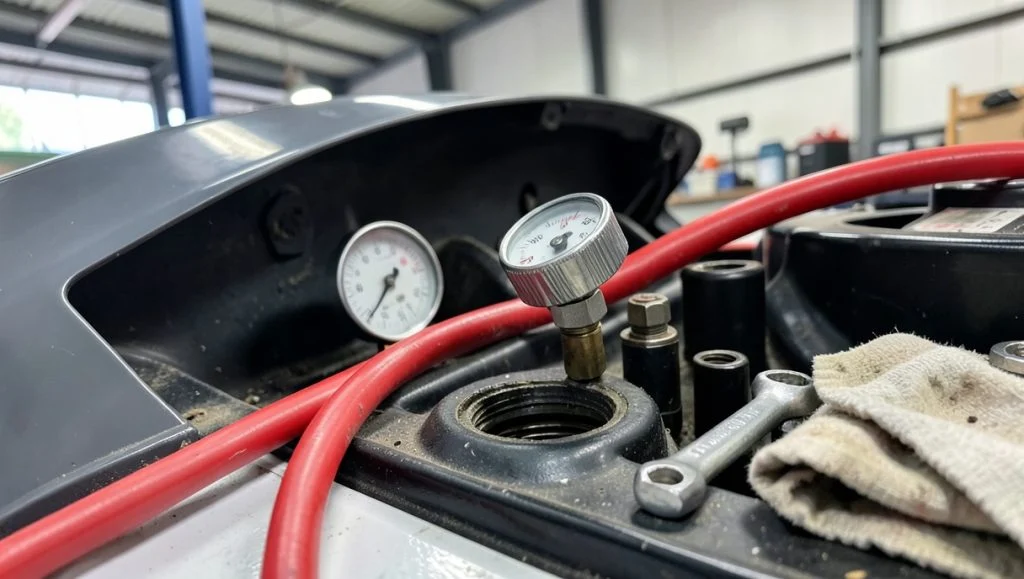
- Run a compression test. All four cylinders should read close to each other. A low cylinder is a warning sign.
- Inspect for corrosion. Check the lower unit, mounting brackets, under the cowling and around bolts, especially on saltwater engines.
- Check the lower unit oil. Milky oil can mean water is getting in past a seal.
- Check the oil level and condition. Very dark, low or fuel-smelling oil suggests poor care.
- Run it on the water. Watch for hard starts, stumbling, alarms or vibration.
- Check for open recalls or bulletins. Give the serial number to a Suzuki dealer.
Will a Suzuki 150 Fit Your Boat?
Check your boat’s capacity plate or builder specs for maximum horsepower and engine weight. Then compare those limits to the DF150’s weight, roughly 518 to 529 lb based on Suzuki Australia’s figures. Also match the shaft length to your transom: 20 in (L) or 25 in (X). A wrong shaft length hurts performance and can cause cooling or ventilation problems.
Do Suzuki 150 Outboards Hold Their Value?
Suzuki now offers outboard motors for all sorts of leisure boats, large and small.
Suzuki has long had loyal fans. More boaters are now considering Suzuki as an alternative to larger brands.
The brand has also earned industry recognition. Suzuki received National Marine Manufacturers Association (NMMA) Innovation Awards several times between 1987 and 2017.
Resale value depends mostly on the engine’s condition and history. To protect it, keep every service receipt, stay on the oil schedule, flush after each use and fix corrosion early. A buyer will pay more for a documented engine with verified hours. Strong local dealer support for the brand can also help resale.
Are Suzuki 150 Outboards Still Being Made?
Yes. The DF150A is part of Suzuki’s current lineup. Suzuki moved outboard production to its Toyokawa plant in Aichi Prefecture, Japan, in 1979. For details on the DF150W, check the model page on Suzuki’s global store site, and ask a US dealer whether it is sold in your market.
The DF150 comes in 20 in (508 mm, L) and 25 in (635 mm, X) shaft lengths. US dealer listings show the DF150A with mechanical controls. Models with digital Precision Control carry the DF150AP name.
You can go visit Marine Outboard Motor to see the latest and older versions of Suzuki 150 outboards which are currently available in the market.
What Do Customer Reviews Say About Suzuki 150 Outboards?
Most Suzuki 150 owners are happy with how efficient the engine is.
Many owners say these four-strokes feel quieter, more efficient, easier to use and more affordable than some competing four-stroke outboards.
Most reviews of the Suzuki 150 are positive. A small number of owners report problems, including one owner who reported a failed powerhead. Watch for corrosion, and for nuts and bolts that may seize and become hard to remove later. A little anti-seize and regular inspection help.
Final Thoughts
Suzuki has built outboards for more than six decades. That experience shows in the DF150’s design.
The Suzuki 150 four-stroke is a strong choice in its class. Its timing chain, 87-octane fuel and simple service make it easy to own.
Like any outboard, it can have problems, mostly tied to fuel, filters and missed service. Most of these issues are simple to fix. Before you buy, make sure a good Suzuki dealer is close to where you boat.
Related Posts:
- Honda Outboards Review: Are They Good And Reliable?
- Mercury Outboard Reviews: Are They Good and Reliable?
- Hangkai Outboard Reviews: Are They Good and Reliable?
- Tohatsu Outboard Reviews: Are They Good And Reliable?
- Are Mercury Black Max 150 Motor Reliable & Good?
Frequently Asked Questions
What fuel does a Suzuki DF150 outboard use?
The Suzuki DF150A runs on regular 87-octane fuel. It uses multi-point sequential electronic fuel injection with Suzuki’s Lean Burn control, which is designed to improve fuel economy. A single fuel filter is easy to reach, so you can check it for water each time you check the oil.
How much does a Suzuki DF150 weigh?
Suzuki Australia lists the DF150A at about 235 kg (518 lb) for the 20 in shaft and 240 kg (529 lb) for the 25 in shaft. Weight can differ by market and version. Confirm the exact figure with a US dealer and compare it to your boat’s capacity plate before rigging.
What shaft lengths does the Suzuki DF150 come in?
The Suzuki DF150 comes in two shaft lengths: 20 in (508 mm, L) and 25 in (635 mm, X). Match the shaft length to your boat’s transom height. The wrong length hurts performance and can cause cooling or ventilation problems, so check your boat builder’s specs first.
How do you prevent corrosion on a Suzuki 150 outboard?
Flush the engine with fresh water after every trip, especially after saltwater use. Suzuki applies a layered anti-corrosion finish to the aluminum parts, but regular care still matters. Inspect the lower unit, mounting brackets and bolts often, and use a little anti-seize so nuts and bolts don’t seize later.
Where are Suzuki outboards made?
Suzuki moved its outboard production to its Toyokawa plant in Aichi Prefecture, Japan, in 1979. Suzuki has designed and built outboard motors since 1965, starting with the D55 two-stroke. Its engine skills come from its background in building cars and motorcycles.
