
Quick answer: Yes. Mercury outboards are generally reliable. Mercury is one of the two biggest outboard brands, alongside Yamaha. New models carry a three-year limited warranty, and a well-maintained Mercury can often reach 2,000 to 3,000 hours. Some older lines, like the OptiMax two-strokes, had known issues. Check recalls and service history before buying a used motor.
Mercury sells a broad outboard lineup: Verado, Pro XS, FourStroke, SeaPro, Jet, and the Avator electric line. That covers everything from small tenders to big offshore boats.
Mercury outboards are built to last, and the company has a long record of new engine designs.
Mercury Marine manufactures outboard motors, sterndrives, and inboard engines. The company competes with Yamaha as the world’s top two makers of marine engines.
While they are unquestionably popular, it is reasonable to wonder if Mercury outboards are any good. This guide covers reliability, known problems, recalls, lifespan, maintenance, and how Mercury compares with other brands.
How Good Are Mercury Outboards?
Mercury outboards are good, well-supported engines from one of the oldest names in the business. Mercury Marine was founded in 1939, when Carl Kiekhaefer bought an outboard company in Cedarburg, Wisconsin. That gives it about 87 years of history as of 2026. The company marked its 85th anniversary in 2024.
Mercury Marine has been a division of Brunswick Corporation since a 1961 merger. It is headquartered in Fond du Lac, Wisconsin.
The brand has kept updating its engines while meeting environmental rules. If you want a widely sold outboard with a large dealer network, Mercury belongs on your short list.
Mercury is now bigger than ever, offering trolling motors, electronics, propellers, and inflatable boats in addition to marine outboard and sterndrive engines.
Throughout it all, the outboard has been Mercury’s signature product.
How Reliable Are Mercury Outboards?
Mercury outboards are reliable when they are maintained on schedule. The current lineup runs from 2.5 hp to 600 hp, so there is an engine for almost any boat. The firm offers both high-performance versions, such as the Pro XS, and simpler ones, such as the traditional FourStroke.
Mercury four-stroke outboards are well built and fuel efficient. These engines took off in the United States around 2001, when Mercury began developing a 225 hp four-stroke outboard that was as light as a two-stroke.
What Is the Warranty on a New Mercury Outboard?
Most new Mercury outboards come with a three-year limited warranty. It covers defects in materials and workmanship. It excludes routine maintenance, normal wear and tear, and repairs made by a technician who is not Mercury-authorized.
Two tips keep your coverage safe:
- Use an authorized Mercury dealer for warranty work.
- Keep receipts for every service. They prove the engine was maintained.
Ask your dealer about extended coverage before the standard warranty ends. Terms and corrosion coverage can vary, so read the current warranty document for your exact model.
How Durable Are Mercury Outboards?
Mercury outboards are durable, and the brand is known for easy repairs and reasonable upkeep. Over the decades, Mercury Marine has earned a solid global reputation for the longevity of its outboards and other engines.
Aside from build quality, the materials and paint that keep seawater from corroding engine parts matter a lot.
To reduce corrosion, the company uses a lot of stainless steel and alloys with less copper.
Its paint process begins with an Iridite sealer, then an Electro Deposition primer, and finally a thick, durable powder coating.
Several users and commentators believe that a few models have sporadic issues. The OptiMax line of fuel-injected two-strokes, for example, may have problems with the injectors and air compressor.
Ethanol has been known to erode fuel lines. This is not unique to Mercury.
Are Mercury Verado Outboards Reliable?
Verado is Mercury’s premium line, and today’s models use a simpler design than the originals. The first Verado, launched in 2004, was a supercharged inline four- and six-cylinder engine. The current Verado line uses naturally aspirated V8, V10, and V12 engines.
| Verado engine | Displacement | Horsepower |
|---|---|---|
| V8 | 4.6L | About 250–300 hp |
| V10 | 5.7L | 350–400 hp |
| V12 | 7.6L | 600 hp |
The 600 hp Verado V12 is Mercury’s flagship outboard.
New Verados have a normal recall history for complex engines. In 2023, Mercury recalled the V12 600 hp Verado and V12 500 hp SeaPro for a possibly faulty steering sensor. If the sensor fails, the engine goes into “guardian mode.” That reduces power and may reduce steering.
Decision rule: A new Verado is a sound choice if you have a Mercury dealer nearby. These are complex engines, so local service support matters more than with a small portable motor. If you are buying a used Verado, confirm that all recall work is done.
Are Mercury Avator Electric Outboards Worth It?
Avator is worth a look if you run short trips at low speed on a small boat. The Avator line started with the 7.5e, 20e, and 35e. These are lightweight, portable motors with swappable lithium-ion batteries. Larger 75e and 110e models have since been announced.
Electric motors have fewer moving parts than gas engines. There is no oil to change or fuel to go stale. The trade-off is range. Your time on the water depends on battery capacity, so plan trips around it.
Avator is a newer line, so there is not yet a long track record for long-term reliability. If you need long range or high speed, a gas FourStroke is still the safer pick.
What About Older Mercury Outboards?
Mercury Marine has created several famous and ground-breaking models over the years.
One early landmark was the Mercury Lightning, which debuted in 1947. It brought affordable power and quality in a lightweight package with 10 horsepower.
The Mercury Mark 75, a 60-horsepower outboard motor, was launched in 1956. It was the most powerful and fuel-efficient engine available at the time of its launch.
The 1750 “Black Max” arrived in 1976. It was the first V6 outboard engine ever produced, with 175 horsepower.
In 1996, Mercury released the two-stroke OptiMax DFI (direct fuel injection), which lowered hydrocarbon and carbon monoxide emissions.
Owners of the Mercury four-stroke 115 hp engine from the 2000s often leave strong reviews online.
Which Mercury Outboards Should You Approach With Caution?
No single model year is a guaranteed lemon. But some lines need extra checks before you buy used:
- OptiMax two-strokes: Watch for injector and air compressor problems. Ask for service records on these parts.
- Early supercharged Verado L4 and L6: These are more complex than newer naturally aspirated Verados. Confirm that recall work and supercharger service were done.
- Any model with an open recall: Check the serial number first (steps below).
- Any engine with no service history: Poor maintenance hurts a motor more than its model year does.
Do They Still Make Parts For Older Models?
Yes, for many models. Mercury Marine was founded in 1939, and it still offers some parts and accessories for older engines. Parts for very old outboards can be harder to find through Mercury itself.
You can find most of the parts for your older outboard from the Wholesale Marine website. You can get anodes, control cables, cooling systems, electrical systems, fuel systems, ignition systems, gear cases, drive parts, internal engine parts, oil & filters, specialty tools, propellers, prop hardware, trim systems, and so on.
From Perf Pro-Tech, you can search for replacement parts for your older models of Mercury outboards by using their advanced search by the model system.
Mercury officially offers parts from their store. You can visit this page if you want to know more about older part distribution from Mercury. You can also visit their Dealer Finder page if you want to look for dealers.
What Are Typical Problems With Mercury Outboards?
The most common complaints involve OptiMax injectors and compressors, and fuel lines damaged by ethanol. Ethanol damage is not unique to Mercury. Like every large maker, Mercury has also issued recalls over the years.
A recall on 1998 3.0 liter outboards over steering arm bolt holes occurred in 2003, affecting 6830 motors.
Early Verado L4 and L6 models have also been linked to a power steering fuse recall. Check the status of any used Verado by serial number.
In 1981, 4500 25 horsepower units were impacted by a steering handle malfunction. In 1998, 5975 units were impacted by a malfunctioning flame arrestor.
In 2020, there was a recall of 25 and 30 horsepower versions from 2006 due to faults in the top mounting bolts; 22,167 units were impacted.
Some V6 and V8 models have also been reported in a fuel line recall. If you own one, confirm whether the fix has been done.
In 2023, the V12 600 hp Verado and V12 500 hp SeaPro were recalled for a possibly faulty steering sensor, as covered above.
How Do I Check If My Mercury Outboard Has a Recall?
Use the engine’s serial number. Follow these steps:
- Find the serial number. It is on a tag on the engine, usually on the transom bracket or swivel bracket.
- Enter the serial number in Mercury’s recall or product lookup on its website, or call an authorized Mercury dealer.
- Search the US Coast Guard’s recall database for your engine model.
- If a recall is open, book the repair with a Mercury dealer. Recall repairs are typically done at no cost to the owner.
- Keep the paperwork. It helps when you sell the motor.
How Long Do Mercury Outboards Last?
A properly maintained Mercury outboard can be expected to last 2,000 or perhaps 3,000 hours. Getting an exact average lifespan for any brand is hard, because owners maintain their engines very differently.
After around 1,500 hours, most manufacturers suggest a rebuild. This helps extend the life of the motor as much as possible.
Forums are also full of stories from owners who have run their Mercury outboards for more than 20 years.
What Maintenance Keeps a Mercury Outboard Running Longer?
Regular maintenance is the biggest factor in how many hours you get. Follow the intervals in your owner’s manual. The main items are:
- Engine oil and filter (four-strokes): Change on schedule to protect the powerhead.
- Water pump impeller: A worn impeller can cause overheating. Replace it at the recommended interval.
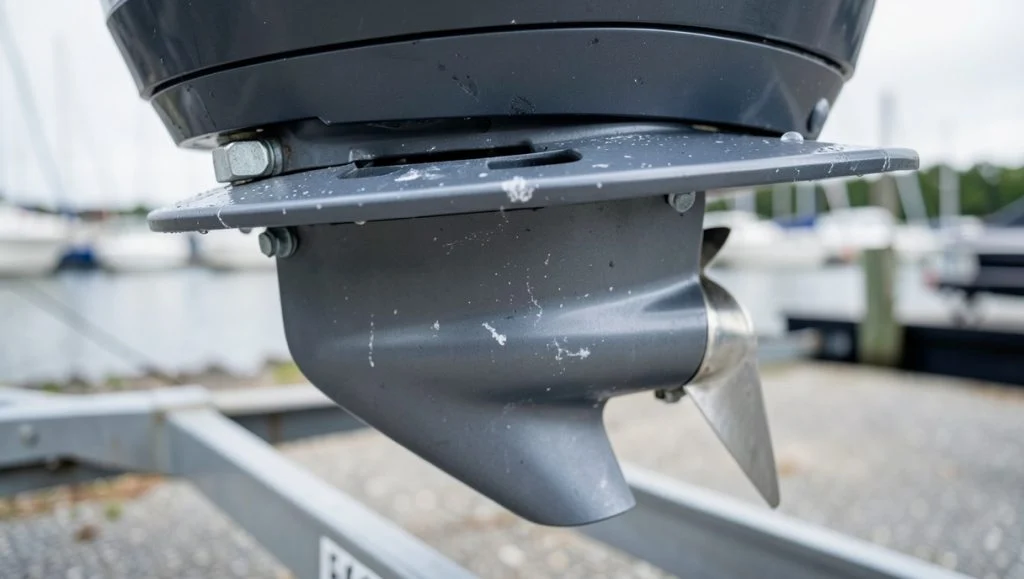
- Gearcase lube: Change it and check the old oil. Milky oil means water is getting in.
- Anodes: Replace them before they wear away. They protect the engine from corrosion.
- Fuel filter and fuel lines: Inspect them often, especially if you use ethanol fuel.
- Freshwater flush: Flush after every saltwater trip.
How Does Mercury Compare With Yamaha, Suzuki, Honda, and Tohatsu?
All five are established outboard brands, and each can deliver long service with good maintenance. There is no public, independent data that proves one brand is clearly the most reliable. The better choice usually comes down to service support and the right engine for your boat.
Compare brands on these points before you buy:
| What to compare | Why it matters |
|---|---|
| Warranty length and terms | Mercury’s standard is a three-year limited warranty. Check each rival’s current terms, including corrosion coverage. |
| Local dealer network | A nearby authorized dealer means faster repairs and easier warranty claims. |
| Parts availability | Common parts should be easy to get in your area. |
| Horsepower range | Mercury runs from 2.5 hp to 600 hp. Make sure the brand offers the size your boat needs. |
| Corrosion protection | Critical for saltwater use. |
| Resale demand | Popular brands are often easier to sell later. |
Are Mercury Outboards More Reliable Than Yamaha?
Neither brand is clearly more reliable. Mercury and Yamaha are the two biggest outboard makers, and both have strong reputations. Pick the one with the better dealer near where you keep your boat.
Is Mercury or Suzuki Better for Saltwater?
Both brands sell outboards that are widely used in saltwater. Mercury uses stainless steel, low-copper alloys, and a multi-layer paint process to fight corrosion. For either brand, saltwater life depends most on freshwater flushing, fresh anodes, and regular inspections. Choose based on local service and the model that fits your boat.
For more detail on other brands, see our reviews of Honda, Suzuki, and Tohatsu outboards linked at the end of this article.
Do Mercury Outboards Hold Their Value?
Mercury outboards are widely sold and widely serviced, which helps them stay in demand on the used market. But the price a used motor brings depends mostly on its condition. These factors matter most:
- Engine hours: Lower hours usually mean a higher price.
- Service records: Documented maintenance gives buyers confidence.
- Freshwater vs. saltwater use: Freshwater engines often show less corrosion.
- Model line: Engines with known issues, such as some OptiMax models, can be harder to sell.
- Recall status: Completed recall work removes a buyer worry.
- Remaining warranty: Coverage that transfers to a new owner adds value.
Prices vary by horsepower, region, and model year. Check current dealer pricing and recent local listings before you buy or sell.
What Should You Check Before Buying a Used Mercury Outboard?
Use this checklist on any used Mercury:
- Check the hours. Ask how many hours are on the engine and how it was used.
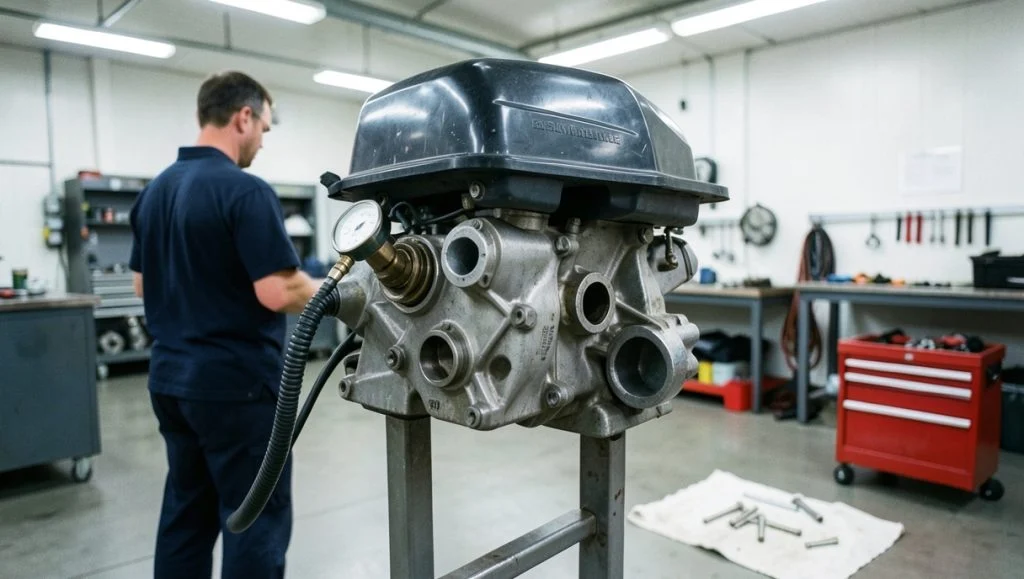
- Run a compression test. Readings should be even across all cylinders.
- Inspect for corrosion. Look at the lower unit, bracket, and under the cowling.
- Ask for service records. Look for oil changes, impeller replacements, and gearcase lube changes.
- Check the gearcase oil. Milky oil or metal flakes are warning signs.
- Look up recalls by serial number. Confirm all recall work is done.
- Watch a cold start and water test. Confirm a steady telltale stream of cooling water.
- Consider a dealer inspection. A Mercury technician can read engine data and spot problems.
Are Mercury Outboards Still Being Made?
Yes. Many Mercury outboards are still built in Fond du Lac, Wisconsin, where the company’s headquarters is located. Mercury also has production sites in other parts of the world.
Mercury groups its outboards by family, not by horsepower bands. The current families are:
| Family | What it is |
|---|---|
| FourStroke | Everyday outboards from 2.5 to 300 hp |
| Pro XS | Performance outboards |
| SeaPro | Commercial outboards, including a V12 500 hp |
| Verado | Premium V8, V10, and V12 engines, up to 600 hp |
| Avator | Electric outboards |
Mercury also sells Jet outboards. The Mercury 60 EFI is a popular 60 hp mid-range FourStroke. It is not the flagship. That title belongs to the 600 hp Verado V12.
The small Mercury 6 hp four-stroke is one of the most popular little outboards. It is light enough to carry and suits small tenders.
You can visit their Outboard page if you want detailed specifications of the available outboards.
What Do Customer Reviews Say About Mercury Outboards?
Most customer reviews of Mercury outboards are positive. Customers on various websites say they are happy with their outboards, and the company has a good overall reputation.
A small number of reviews mention problems.
One customer reported a blocked engine with lower speed and RPM. Another reported a problem with the hub kit inside the prop. Some users said a seam was coming apart.
Final Thoughts
Mercury outboards are a reliable choice for most boaters. They offer a good weight-to-power ratio for everything from small sailboats and tenders to large offshore boats.
Mercury Marine has grown through about 87 years of history since 1939, including downturns in the marine industry. To get the most from one, buy from a dealer you can reach easily, keep up with maintenance, and check recalls by serial number. If you are buying used, be extra careful with OptiMax two-strokes and early supercharged Verados.
Related Posts:
- Honda Outboards Review: Are They Good And Reliable?
- Suzuki 150 Outboard Reviews: Are They Good and Reliable?
- Hangkai Outboard Reviews: Are They Good and Reliable?
- Tohatsu Outboard Reviews: Are They Good And Reliable?
- Are Mercury Black Max 150 Motor Reliable & Good?
Frequently Asked Questions About Mercury Outboards
Who owns Mercury Marine?
Brunswick Corporation owns Mercury Marine. Mercury has been a Brunswick division since a 1961 merger. Carl Kiekhaefer founded the company in 1939, when he bought an outboard company in Cedarburg, Wisconsin. Mercury Marine is headquartered in Fond du Lac, Wisconsin, where many of its outboards are still built.
When should a Mercury outboard be rebuilt?
Most manufacturers suggest a rebuild at around 1,500 hours. A rebuild at that point helps the motor last as long as possible. A properly maintained Mercury can often reach 2,000 to 3,000 hours. Service habits affect that number more than anything else, so follow your owner’s manual intervals.
Does ethanol fuel damage Mercury outboards?
Ethanol fuel can erode fuel lines on Mercury outboards, but this problem is not unique to Mercury. Any outboard that runs on ethanol blends can be affected. Inspect the fuel filter and fuel lines often, and replace worn parts on the schedule in your owner’s manual to avoid fuel system problems.
What horsepower range do Mercury outboards come in?
Mercury outboards range from 2.5 hp to 600 hp. The FourStroke family covers 2.5 to 300 hp for everyday boating. Pro XS models serve performance boaters, and SeaPro serves commercial users. The flagship is the 600 hp Verado V12. Mercury also sells Jet outboards and the Avator electric line.
What does milky gearcase oil mean on a Mercury outboard?
Milky gearcase oil means water is getting into the lower unit. Treat it as a warning sign. Metal flakes in the oil are another red flag. Check the old oil every time you change the gearcase lube, and check it before buying any used Mercury outboard.
