
Quick answer: Yes, Haynie boats are good for the right buyer. Haynie builds hand-laid fiberglass bay boats one at a time in Texas. They use a no-rot panel, fiberglass stringers, full foam injection and glassed-in consoles. They suit Gulf Coast shallow-water anglers who want a custom rig. They suit buyers far from Texas less well.
Are Haynie Bay Boats Good? The Short Answer
Are Haynie boats good? Based on how they are built, yes. Haynie’s published construction details describe a wood-free hull. It has fiberglass stringers, a no-rot boat panel and marine foam injected throughout. The center consoles are glassed in, not screwed down. Each of these choices removes a common failure point found on older or cheaper boats.
The boats are designed for one job: running the shallow, windy bays of the Texas Coastal Bend. That makes them a strong fit for some buyers and a weaker fit for others.
- Good fit: Gulf Coast anglers who fish skinny water and choppy open bays and want a custom layout.
- Weaker fit: Buyers who live far from Texas dealers. Also buyers who want warranty terms published up front and a large national dealer network.
One caveat: independent lab tests and magazine test data on Haynie boats are hard to find. This verdict rests on the maker’s build specs and on how well the boats fit their intended use. It does not rest on measured performance numbers.
Who Builds Haynie Boats and Where?
Haynie boats come from the Texas Coastal Bend. According to the Harte Research Institute, Rayburn Haynie started building boats in Seadrift, Texas, in the 1950s. He designed them for the area’s shallow bays and windy conditions.
Who owns Haynie Bay Boats now?
A November 14, 2024 press release from the Harte Research Institute says Haynie’s legacy continues through a joint venture with Chris’s Marine in Aransas Pass, Texas. If ownership details matter to your purchase, ask the dealer to confirm the current company structure in writing.
Watch for a similar name on older boats
US Coast Guard manufacturer records list a separate Seadrift-area firm, “Haynie’s Boat Works,” as out of business. If you are shopping for an older used boat, check the manufacturer code in the hull identification number (HIN). Make sure you know which company actually built the hull.
How Are Haynie Boats Built?
Haynie’s construction page lists five main build features. Here is what each one is and why it matters.
- One-at-a-time, hand-laid glass. Each boat is built individually, and all glass is hand laid. This allows custom layouts. It also means quality depends on the builder’s crew and process rather than an automated line.
- No-rot panel and fiberglass stringers. The structure has no wood that can soak up water and decay.
- Full foam injection. The entire boat is injected with marine foam, and all injection points are sealed. Haynie says every inch of the boat is fiberglassed.
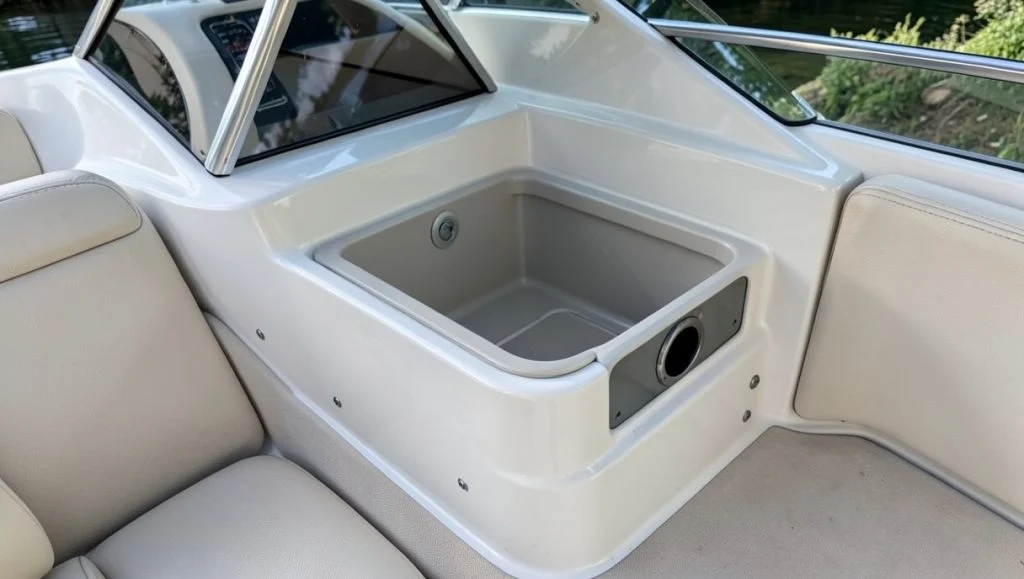
- Glassed-in consoles. Center consoles are glassed to the deck, so there are no screws to work loose. Console height can be adjusted by about 2 to 4 inches or more.
- Gelcoat inside and out. This includes the storage boxes and the rigging box. That gives a sealed, easier-to-clean surface in areas that are often left as bare glass.
Why does a wood-free stringer system matter?
Stringers are the long beams that stiffen the hull bottom. On many older boats they were wood wrapped in fiberglass. Once water gets in through a screw hole or crack, the wood can rot unseen, and the hull loses stiffness. Fixing it usually means cutting out the deck.
So, do Haynie boats have wood in them? Haynie says no. It uses a no-rot panel and a fiberglass stringer system, so that failure mode is designed out.
What does foam injection do for a bay boat?
Foam fills empty spaces inside the hull. In general, this adds flotation, stiffens the structure and cuts down on hollow-hull noise in chop. Sealing the injection points helps keep water from reaching the foam.
The trade-off: a foam-filled hull has fewer open spaces to reach into. Tracking a leak, or running and replacing wiring, can take more work than on a boat with open bilges and chases. Ask how the rigging runs before you buy, and keep any rigging diagrams the dealer provides.
Which Haynie Model Fits How You Fish?
Haynie’s official site lists six current models. The table uses only the maker’s own short descriptions. Where Haynie gives no description, none is added.
| Model | Haynie’s description | Best match |
|---|---|---|
| 23′ Magnum | “Made to eat the chop” | Open-bay anglers who often cross rough water |
| Haynie Cat | Built to run and get up shallow | Skinny-water and flats anglers |
| 24′ VLS | Dry ride | Anglers who want to stay drier in spray |
| 23′ Big Foot | All-around family fishing boat | Families and mixed-use owners |
| Z21 | No short description given | Ask the dealer about intended use |
| 21 Super Cat | No short description given | Ask the dealer about intended use |
What is the best Haynie model for shallow water?
Based on Haynie’s own descriptions, the Haynie Cat is the model aimed most directly at shallow water. Use these decision rules:
- You mostly pole or wade skinny flats: start with the Haynie Cat. Ask about the 21 Super Cat too.
- You often run open bays in wind: start with the 23′ Magnum or the 24′ VLS.
- You fish with family and want one boat for everything: start with the 23′ Big Foot.
Is a Haynie Magnum good in rough water?
Haynie markets the 23′ Magnum as “made to eat the chop,” so rough bay water is its intended use. No independent rough-water test data is available to confirm how it compares with other hulls. A sea trial in real chop is the best way to judge it for yourself.
You may also see a 25-foot Magnum on the used market. It is a larger model. CCA Texas donated a 25-foot Haynie Magnum with a 300 hp Yamaha to the Harte Research Institute for use as a research boat.
Haynie does not publish draft, weight or maximum horsepower in its short model descriptions. Confirm max HP and capacity on the boat’s capacity plate. Get draft and dry weight in writing from the dealer.
What Are the Downsides of Owning a Haynie?
- No published warranty terms. You have to get hull warranty details in writing from the builder or dealer.
- A mostly Texas service network. If you live elsewhere, warranty work and factory-familiar service may mean a long tow.
- Every used boat is different. Haynie offers custom deck sizes, storage, K-tops and LED lighting. That means two used boats of the same model can be rigged very differently. Paperwork matters.
- Shallow-water hulls have trade-offs. As a general rule, catamaran and tunnel hulls are shaped to run and get up in shallow water. That shape can cost some comfort in steep, rough water compared with a deeper-V hull. This is a design trade-off for all shallow-water boats, not a known Haynie flaw.
What Does Haynie’s Warranty Cover?
Haynie’s website does not publish warranty terms. It only offers a warranty inquiry contact for warranty questions and transfer paperwork. So, does Haynie offer a transferable warranty? The site mentions transfer paperwork, but it does not say what transfers or for how long. Ask directly.
Keep in mind that the engine warranty is separate. If the boat has a Mercury or Yamaha outboard, the engine warranty comes from the engine maker, not from Haynie.
- Ask the builder or dealer for the hull warranty in writing before you pay.
- Confirm whether it transfers to a second owner, and what it covers after transfer.
- After a used purchase, file the transfer paperwork through Haynie’s warranty contact.
- Check engine warranty status separately with the engine maker or an authorized dealer.
- Keep the build sheet, rigging records and all warranty documents with the boat.
How Do You Check a Used Haynie Before Buying?
Use this checklist. It is built around how Haynie boats are made and the fact that most are custom rigs.
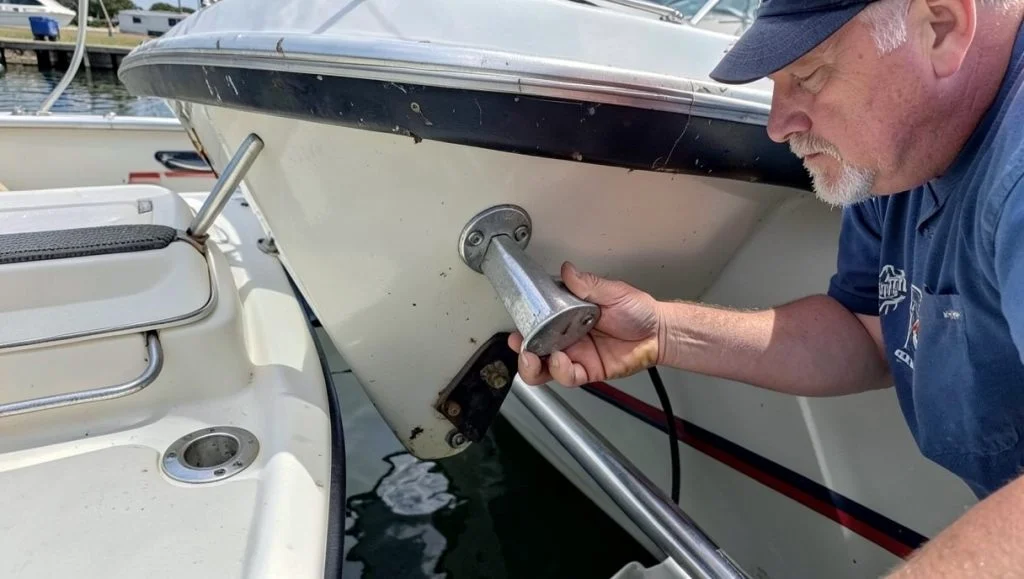
- Walk the deck and tap the hull. Feel for soft or flexing spots. On a wood-free hull, softness can point to damage or a bond problem.
- Check the console bond. The console should be glassed to the deck. Look for cracks or gaps where they meet.
- Inspect the gelcoat. Look for cracks around boxes, hatches and the rigging box. Star cracks can signal impact or flex.
- Check the transom and jack plate mounts. Look for cracks, weeping or loose hardware around bolts.
- Look for signs of water in the foam. A boat that sits lower than it should, or weighs more than expected on a trailer scale, may have water in the foam.
- Verify the HIN. Confirm that the manufacturer code matches Haynie Bay Boats, not the out-of-business Haynie’s Boat Works or another builder.
- Confirm engine hours and warranty. Get the hours from the engine’s own records. Ask whether any remaining engine warranty transfers.
- Collect the paperwork. Ask for the build sheet, the rigging list and any service records.
- Get a marine survey. Hire an independent surveyor, not one picked by the seller.
- Sea trial in both chop and shallow water. Check how it rides in waves and how it gets up and runs shallow.
Is a Haynie Worth It Compared With Other Bay Boats?
Rather than rank brands, use these decision rules:
- Pick a Haynie if you fish Texas or nearby Gulf shallow bays, live near a Haynie dealer and want a custom layout.
- Pick a national brand if you want a wide dealer and service network, published warranty terms or easy resale outside Texas.
For comparisons, see our guides on [INTERNAL LINK: Pathfinder boats review], [INTERNAL LINK: Blue Wave boats review], [INTERNAL LINK: Sea Born boats review] and [INTERNAL LINK: Tidewater boats review].
Are Haynie boats worth the money used?
A used Haynie can be a good value because the wood-free, foam-filled build removes the rot risk common in older boats. The value depends on that specific boat. Check its condition, its rigging and its paperwork. Pay for a survey and a sea trial before deciding.
The verdict
Haynie builds a durable, purpose-built Texas bay boat. Its build specs are hand-laid glass, no wood, full foam injection and glassed-in consoles, and they point to a hull made to last. The weak spots are on the ownership side: no published warranty terms, a mostly Texas dealer network, and custom rigs that make each used boat unique. If you fish shallow Gulf bays and can live with those limits, a Haynie is a strong choice. Get the warranty in writing, match the model to your water, and survey any used boat before you buy.
Haynie Bay Boats FAQ
Do Haynie boats have wood in them?
No, according to Haynie. The builder says its hulls use a no-rot boat panel and a fiberglass stringer system instead of wood. That removes a common failure on older boats. On those boats, water gets into wood stringers through screw holes or cracks, rots them unseen and weakens the hull.
Can a Haynie hull warranty be transferred to a second owner?
Possibly, but you need to confirm it. Haynie’s website mentions warranty transfer paperwork. It does not publish what transfers or for how long. Ask the builder or dealer for the hull warranty in writing and confirm what it covers for a second owner. Then file the transfer paperwork through Haynie’s warranty contact.
Does Haynie’s warranty cover the outboard engine?
No. The engine warranty is separate from the hull warranty. If the boat has a Mercury or Yamaha outboard, the engine warranty comes from the engine maker, not from Haynie. On a used boat, check engine hours and warranty status with the engine maker or an authorized dealer.
How can I tell if a used boat was built by Haynie Bay Boats?
Check the manufacturer code in the hull identification number (HIN). US Coast Guard records list a separate Seadrift-area firm, Haynie’s Boat Works, as out of business. Confirm that the code matches Haynie Bay Boats. Also ask the seller for the build sheet, rigging list and service records.
Is a foam-filled Haynie hull harder to work on?
It can be for some jobs. A foam-filled hull has fewer open spaces to reach into. Tracking a leak, or running and replacing wiring, can take more work than on a boat with open bilges and chases. Ask how the rigging runs before you buy, and keep any rigging diagrams.


Leave a Reply