
Quick answer: Are Carolina Skiff boats good? Yes, if you want a stable, affordable, shallow-water boat for protected water. They are not the best fit for regular rough-water or offshore running. No independent long-term failure data turned up, so judge reliability by construction, warranty terms, reviews and upkeep.
Are Carolina Skiff boats good?
Carolina Skiff boats are a good match for shallow rivers, backwaters, bays and sounds. The right model depends on how rough your water gets. A skiff bought for calm creeks can be the wrong boat for a windy bay.
The company says its hulls are completely wood free. It also lists a 10-year structural hull warranty and 5-year bow-to-stern coverage on eligible 2020 and newer boats.
| Verdict | Details |
|---|---|
| Best for | Shallow-water anglers and budget-minded families on protected water |
| Think twice if | You often cross open water, run in steep chop or plan regular offshore trips |
| Check first | Current written warranty, capacity plate, horsepower limit and a sea trial in typical conditions |
Are Carolina Skiff boats reliable?
They have a good reputation, but their long-term reliability has not been measured in any data we found. Our research found no independent failure-rate or long-term repair-cost figures for the brand.
The best third-party signal is dated. A Sportfishing review updated in 2015 said the brand had a reputation for reliability, durability and safety. It also said Carolina Skiff ranked tops among 15- to 20-foot boats and fourth among 21- to 25-foot boats in the magazine’s owner survey. That result is useful history, but it does not tell you how a current boat will hold up.
Which Carolina Skiff series fits your water?
Pick the series by the roughest water you will fish often, not the calmest day. The company’s lineup includes the E Series, JLS, LS and Ultra Elite. The table shows only specs we could verify, so a blank spec means you should get the current sheet from a dealer.
| Series | Example | Verified specs | Likely fit |
|---|---|---|---|
| E Series JVX | E16, E18, E20 JVX | About 4 in draft, 78 in beam, 973-1,230 lb (company figures, model year not stated) | Backwater and shallow flats |
| E Series DLX | E21, E24 DLX | Not verified; ask for the current sheet | Compare with the JVX and LS |
| E Series EV | Ask dealer | Not verified; ask for the current sheet | Confirm with a dealer |
| JLS | Ask dealer | Not verified; ask for the current sheet | Confirm with a dealer |
| LS | 25 LS (2020 review) | 24 ft 10 in length, 8 ft beam, 2,700 lb, 7 in draft with engine trimmed up, 250 hp max | Bays, sounds and family use |
| Ultra Elite | 23 Ultra Elite SS (2011 review) | 15-degree deadrise, 1 ft hull draft, 2,800 lb dry, 250 hp max | Bays and choppier inshore water |
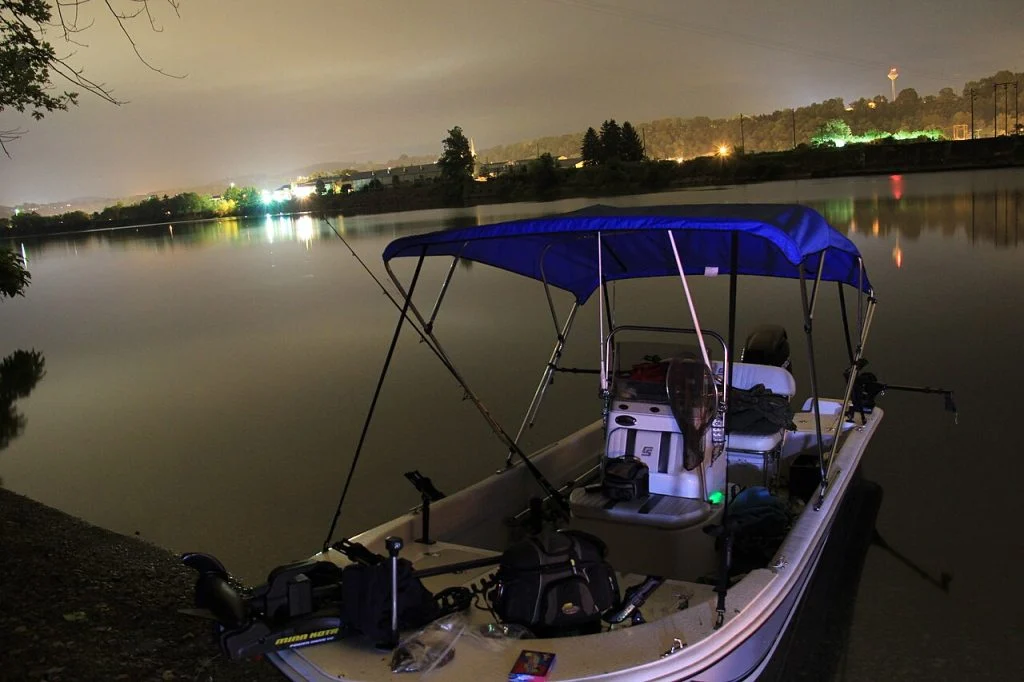
Backwater and shallow flats
The JVX is the light, shallow-draft end of the range. Carolina Skiff lists about 4 inches of draft and weights of 973 lb (16), 1,073 lb (18) and 1,230 lb (20). It describes the hull as a lightweight, all-composite modified V.
How shallow can a Carolina Skiff run?
The shallowest verified figure is the JVX’s draft of about 4 inches, and that is a company number. Draft is not the same as safe running depth. Load, trim and the depth your outboard needs all change how shallow you can actually go.
Bays, sounds and family use
Larger hulls make more sense when wind and open stretches are part of the plan. The 25 LS and 23 Ultra Elite SS each weigh more than twice as much as the 20 JVX. You give up skinny-water access in exchange. Reviews measured draft in different ways, so compare current specs side by side before deciding.
How well are Carolina Skiff boats built?
The construction approach is sound on paper, and it avoids one common old-boat problem. Most of the details, however, come from the company.
- Company claims: An integrated fiberglass stringer system, wood-free hulls, foam flotation that exceeds Coast Guard requirements, and construction to ABYC and USCG standards.
- Independent reviewer observations: A 2020 review of the 25 LS said a complete inner liner bonded to the hull adds stiffness and rigidity.
Stringers are the lengthwise beams that stiffen a hull’s bottom. An integrated fiberglass system makes them part of the composite structure. A bonded liner is an inner fiberglass shell joined to the hull, which helps the two parts work as one unit.
Do Carolina Skiff boats have wood in them?
Carolina Skiff says its hulls are completely wood free. That removes the rotted-stringer risk found in wood-cored boats, where trapped water can slowly weaken the structure.
Wood-free does not mean damage-proof. Impact damage, stress cracks and poor repairs can still weaken or devalue a composite boat. On an older used boat, confirm the construction for that model year instead of assuming the current claim applies.
How do Carolina Skiffs ride in rough water?
Most Carolina Skiffs are better in protected water than in rough water, though ride quality varies by hull. Light weight and shallow draft help in skinny water. The same traits give up comfort in steep chop, where a light, shallow hull tends to get knocked around more.
Larger hulls can do better. A Sportfishing review of the 23 Ultra Elite SS, updated in 2011, called it “the best-running Carolina Skiff I’ve ever driven” and described a dry, smooth ride in rough chop. That boat had a 15-degree deadrise, which is the angle of the hull bottom. It is one review of one older model, so do not apply it to the whole brand.
Can you take a Carolina Skiff offshore?
Do not treat a skiff as an offshore boat. Even the 2015 Sportfishing review describes only “carefully calculated ventures offshore” for a Sea Chaser 21 LX Bay Runner, which is a cautious description.
Use this rule before every trip: check the forecast against your specific hull and its capacity plate. If the wind, waves or load would push that boat past a comfortable margin, stay in protected water or stay home.
What does the Carolina Skiff warranty actually cover?
The warranty covers structural hull defects and company-installed components, but it leaves out many of the costs owners worry about most. These are the published terms.
| Coverage | Term | Fine print |
|---|---|---|
| Structural hull | 10 years from original purchase | Defects in material or workmanship in new fiberglass hulls; eligible 2020 or newer boats sold by an authorized dealer |
| Bow-to-stern components | 5 years, parts and labor | Parts built or installed by the company; wording cites both purchase and registration dates, so confirm the start date |
| Cosmetic gelcoat, including cracks | Report within 180 days of delivery | Must be reported to an authorized dealer |
| Non-recreational use | 1 year from purchase | Includes crabbing, charters and rental fleets |
The key exclusions are:
- Engines, outdrives, electronics and batteries
- Items covered by their own manufacturer warranties
- Stress cracks and gelcoat wear
- Osmotic blistering, corrosion, rot and mold
- Trailering or towing damage
- Unauthorized modifications
Watch for a wording conflict. The About page says bottom construction is warranted against delamination or separation for 10 years on 2020 or newer models, if the hull and floor have not been damaged by improper use. The warranty page lists delamination as an exclusion. Get the current written warranty from your dealer and ask which language controls.
Charter, crabbing and rental users: Non-recreational use cuts coverage to 1 year. Commercial use also requires written notice to the Warranty Department before you start. Send that notice first and keep a copy.
What problems should Carolina Skiff owners watch for?
The risks to plan for are the ones the warranty leaves to you. This list does not describe known defects. It shows where repair bills are likely to be your responsibility.
- Gelcoat and stress cracks: Inspect the boat closely at delivery. Cosmetic cracks have a 180-day reporting window, and stress cracks are listed as excluded.
- Blisters: Boats kept in the water face this risk, and osmotic blistering is excluded.
- Trailer damage: Check bunks, rollers and tie-downs, since trailering damage is excluded.
- Saltwater corrosion: Rinse the boat, trailer and hardware with fresh water after salt use.
- Aftermarket wiring or fasteners: Unauthorized modifications are excluded. Ask the dealer before drilling holes or adding circuits to a boat under warranty.
Carolina Skiff recommends a waterproof barrier paint coat for boats exposed to water for more than one week at a time. If you leave a boat at a dock or mooring, budget for this at the start. Since blistering is excluded, treat the coating as your own protection and do not count on the warranty as a backup.
Outboard reliability is a separate question. It depends on the engine maker and your maintenance, because Carolina Skiff’s warranty excludes engines. Ask for the engine maker’s warranty terms in writing.
Is a used Carolina Skiff worth buying?
A used Carolina Skiff can be worth buying if the hull, engine and paperwork all check out. Do not pay extra for warranty coverage you cannot confirm. The published 10-year and 5-year terms apply to 2020 and newer model years, so do not assume an older boat has them.
Is the Carolina Skiff warranty transferable?
Yes, with conditions. The hull warranty can go to one subsequent owner within the 10-year period, pending a re-certification inspection and fees. If the seller was not the original owner, ask whether that one transfer has already been used.
For bow-to-stern protections, the new owner must notify the Warranty Department within 30 days. You will need to provide your name, the HIN (hull identification number) and a bill of sale.
Used-boat inspection checklist
- HIN and paperwork: Match the HIN on the hull to the title, registration and bill of sale.
- Hull bottom and keel: Look for deep gouges, patched areas and blisters.
- Stress cracks: Check around hardware, the console base and the transom.
- Deck flex: Walk the whole deck and note soft or bouncy spots.
- Wiring and aftermarket holes: Look for messy splices and poorly sealed or unused holes.
- Trailer condition: Check the frame, axle, bearings, tires, bunks and lights.
- Engine hours and records: Ask for service records and have a qualified mechanic inspect the outboard.
- Sea trial: Run the boat in conditions like those you will actually use it in.
Check the HIN for open recalls with the US Coast Guard before you pay. We could not verify the brand’s full recall history, so check each boat individually.
Ask how the boat was cared for after salt use. J.D. Power notes that boats used exclusively in salt water and not maintained and cleansed with fresh water may depreciate more rapidly.
Should you buy a Carolina Skiff?
Buy one if your typical water matches the hull and the warranty limits work for how you will use it. These rules cover the most common buyers:
- If you fish shallow water, start with the JVX and confirm its draft with your real load and engine.
- If you are a budget-minded family on protected water, compare larger models that offer more beam and weight, such as the LS.
- If you will use it commercially, plan around 1-year coverage and send written notice before you start.
- If you regularly cross open water, look at boats built for those conditions instead of stretching a skiff past its strengths.
Compare the out-the-door price with engine, trailer and options from a current dealer quote. Published review prices are old or exclude power, so they will not give you a useful budget.
Before you sign, do these three things:
- Confirm the warranty in writing, including its start date and the delamination language.
- Sea trial the boat in your typical conditions with a realistic load.
- Verify the capacity plate and horsepower limit on the exact boat you are buying.
Carolina Skiff FAQ
Does the Carolina Skiff warranty cover the engine?
No. Carolina Skiff’s warranty excludes engines, outdrives, electronics and batteries, along with items covered by their own manufacturer warranties. Outboard coverage depends on the engine maker, so ask for that company’s warranty terms in writing. Outboard reliability also depends on the engine maker and on how well you maintain the motor.
How long do you have to report gelcoat cracks on a Carolina Skiff?
Cosmetic gelcoat problems, including cracks, must be reported to an authorized dealer within 180 days of delivery. Inspect the boat closely when you take delivery so you do not miss that window. Stress cracks and gelcoat wear are listed as exclusions, so ask your dealer how the current written warranty applies.
Does commercial use affect the Carolina Skiff warranty?
Yes. Non-recreational use, including crabbing, charters and rental fleets, cuts Carolina Skiff warranty coverage to 1 year from purchase. Commercial use also requires written notice to the Warranty Department before you start. Send that notice first, keep a copy, and plan your repair budget around the shorter coverage period.
Does a Carolina Skiff need barrier paint if kept in the water?
Yes, Carolina Skiff recommends a waterproof barrier paint coat for boats exposed to water for more than one week at a time. If you keep a boat at a dock or mooring, budget for the coating at the start. Osmotic blistering is excluded from the warranty, so the coating is your own protection.
How do you check a used Carolina Skiff for recalls?
Check the boat’s HIN, or hull identification number, for open recalls with the US Coast Guard before you pay. First, match the HIN on the hull to the title, registration and bill of sale. The brand’s full recall history could not be verified, so check each boat individually.
Are Carolina Skiff boats built to Coast Guard standards?
Carolina Skiff says its boats are built to ABYC and USCG standards. The company also says its foam flotation exceeds Coast Guard requirements. These are company claims, not independent test results, so verify the capacity plate and horsepower limit on the exact boat you plan to buy before you sign.

Leave a Reply