Quick answer: The most common Lowe Stinger 175 problems are low wide-open-throttle (WOT) RPM caused by the wrong prop, livewell leaks and overflow, failing livewell or bilge pumps, rare cracks at hull welds, and electrical faults from loose or corroded connections. Basic checks fix most of these. Weld cracks should go to an authorized Lowe dealer.
Lowe stinger 175 is a better choice for smaller water bodies that don’t make long runs to their spots. This bass boat with a tough aluminum hull is crafted with state-of-the-art modern techniques learned from decades of experience and slides over sticks and stumps without damage.
But no boat or vehicle is free of problems. Before you buy a new or used Stinger 175, you should know the issues you may face. Lowe still sells this boat in its 2026 lineup, but the name has changed. It is now the Stinger 175C (Stinger 5 Series). The current version is wider and rated for more horsepower than the 2015-2017 Stinger 175.
In this article, I will walk you through the most common problems you might have with the Lowe Stinger 175. I will also cover how to fix them, when to see a dealer, and what to check before you buy a used one.
What are the key specs of the Lowe Stinger 175?
The current Stinger 175C is 17’7″ long with a 90-inch beam and a 90 HP max rating. Here are the main specs from Lowe’s build-and-price page:
| Spec | Stinger 175C (current lineup) |
|---|---|
| Length | 17’7″ |
| Beam | 90 in (7’6″) |
| Max HP | 90 HP (some older listings show 75 HP) |
| Max weight capacity | 1,178 lb |
| Max persons | 4 |
| Fuel capacity | 19 gal |
| Livewells | Two 23-gal aerated livewells |
What is the max horsepower on a Lowe Stinger 175?
The current Stinger 175C is rated for 90 HP. Some older listings show a 75 HP max. Always check the capacity plate on your boat. It shows the legal max HP for your model year. Most dealer packages pair the 2026 boat with a Mercury 90 ELPT FourStroke.
How much does a Lowe Stinger 175 weigh?
The 1,178 lb figure is the max weight capacity. That is how much the boat can carry in people, motor and gear. It is not the boat’s own weight. For the dry hull weight of your exact model year, check the Lowe spec sheet or your owner’s manual. For towing, add the motor, fuel, battery, gear and trailer.
What is the difference between the Lowe Stinger 175 and 175C?
The Stinger 175C is the current version of the same boat, sold in the Stinger 5 Series. Compared with the 2015-2017 Stinger 175, it has a wider beam and a higher horsepower rating. This matters for the problems below. The older boats are more likely to show wear issues like worn hoses, tired pumps and corroded wiring. Newer boats are more likely to still be under warranty.
What are the 5 most common problems with the Lowe Stinger 175?
1. Engine: Low RPM at Wide-Open Throttle
Some owners say their motor can’t reach the rated RPM at WOT. A common cause of this on any outboard boat is over-propping. That means the propeller pitch is too high for the boat and load.
The higher pitch encounters more resistance from the water and prevents the prop from revolving freely. It puts extra pressure on the motor and reduces the RPM. Running a motor below its rated RPM range for long periods adds strain to the engine.
Other things can also lower WOT RPM. These include a heavy load, a fouled hull, a damaged prop, or the wrong motor trim or mounting height. Rule these out before you buy a new prop.
What prop pitch should I use on a Lowe Stinger 175 with a Mercury 90?
There is no single right pitch. The right prop is the one that lets your motor hit the middle-to-upper part of its recommended WOT RPM range with your normal load. You can find that range in your motor’s owner’s manual. Mercury’s rule of thumb is that each 1 inch of added pitch cuts full-throttle RPM by about 150-200.
Follow these steps to pick the right prop:
- Find the recommended WOT RPM range in your motor’s manual.
- Load the boat the way you normally fish: fuel, gear, full livewells and your usual crew.
- Run at WOT on calm water with the motor trimmed for best speed.
- Read RPM with an accurate service tachometer. Dash gauges can be off.
- If RPM is below the range, go down in pitch. Use the 150-200 RPM per inch rule to estimate how many inches.
- If RPM goes above the range, go up in pitch to protect the motor.
How fast is a Lowe Stinger 175 with a 90 hp motor?
Top speed depends on load, prop, water conditions and motor setup, so treat any number you see online as a rough guide. Ask your dealer for a water test with your load. If your top speed drops over time, check WOT RPM first. A low reading points to a prop, load or motor issue.
If you can’t find the cause after these checks, take your boat to the nearest service center.
2. Livewell
Livewell issues are a frequent complaint on bass boats, and the Stinger 175 is no exception. The 2026 Stinger 175C has two 23-gallon aerated livewells. The stern well has a divider, a timer and a recirculating system with a bait bucket. More plumbing means more places for leaks and clogs.
Why is my boat livewell leaking?
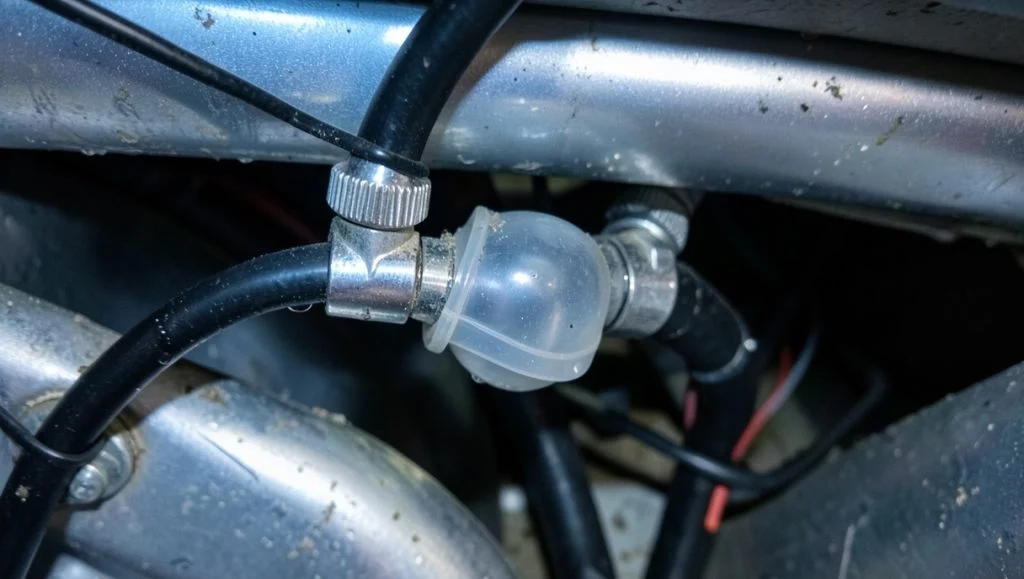
Livewell Leak: The most common problem with Livewell is leaking. Plug your drain and fill your Livewell with water. If the water level doesn’t stay the same, the Livewell has a leak. Most of the time, it leaks around the seams.
Besides, extreme weather or drastic temperature can cause the hoses to crack. Check the hose clamps and fittings under the well too. A loose clamp is an easy fix. Although you can have some temporary solution for a cracked hose or seam, seeing a mechanic is necessary to fix this properly.
Why is my livewell overflowing?
Overflow: Overflow of water in the Livewell happens when the water comes in faster than it drains. Check the drain if it is clogged and clean it. Actually, if you have fish in the Livewell, their waste can cause this clog in the drain.
If the drain is clean and it still happens, check how your livewell controls the fill. If your setup has a flow control or valve, turn it down to reduce the water coming in. If it runs on a timer, set a shorter cycle. Clean the Livewell properly after each use. It will help prevent these problems.
3. Failing Pump (Livewell and Bilge Pumps)
Your Stinger 175 has more than one pump. The livewell aerator or recirculating pump keeps fish alive. The bilge pump removes water from the hull. A failing bilge pump is the more serious problem because it is a safety part. Test it before every trip.
Pump problems can be hard to track down. The pump itself can be broken, or the fault can be in the wiring, fuse, switch or plumbing. Check in this order:
- Check the fuse or breaker for that pump.
- Flip the switch and listen for the motor. If it hums but moves no water, look for a clogged intake or an air lock.
- If it is silent, test for voltage at the pump wires with a voltmeter.
- If voltage is present and the pump still won’t run, the pump has likely failed.
- Replace it with a pump of the same type, flow rating, voltage and hose size. Your dealer can match the factory part for your model year.
Take advice from an expert on whether you should repair or replace it, especially if the fault is in the wiring.
4. Crack in the weld
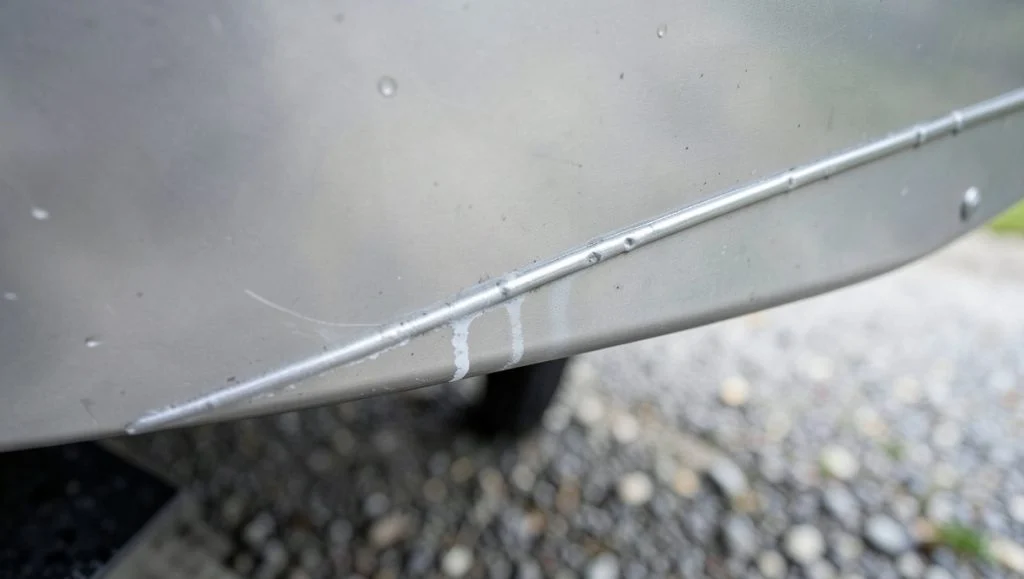
Some owners have reported a crack where the side and the bottom of the hull are welded together. This problem is not common, but it is serious. A cracked weld can let the boat take on water. If you see a crack, a wet bilge you can’t explain, or a weep line at a seam, stop using the boat until it is inspected.
Aluminum welding needs the right equipment and skill, and a poor repair can void your warranty. It’s better to call an authorized Lowe dealer or service center if you ever face this.
Does Lowe warranty cover hull weld cracks?
Yes, in many cases. Lowe’s limited warranty on hull seams and welds covers structural seam defects for the original retail owner’s period of ownership. Lowe will repair or replace at its own discretion. Claims go through an authorized Lowe dealer. The warranty for your boat’s model year is the one that applies.
If you bought the boat used, you are not the original retail owner, so this coverage may not transfer. Coverage for livewells, pumps and electrical parts is usually shorter and separate. Ask your dealer for the warranty document for your model year before you pay for any repair.
5. Electricity
The wiring in a boat is quite complex as it runs under decks, through tight cases, and into closed compartments. Sometimes, the switches can become unable to draw power from the battery or from a connection. It causes electricity issues.
Check the connections with a voltmeter and proceed accordingly to fix this. Start at the battery terminals, then work toward the switch panel. Look for green or white corrosion, loose ring terminals and chafed wires.
Safety warning: Electrical faults on a boat can cause a fire. If you smell burning plastic, see melted insulation, or a fuse keeps blowing, shut off the battery switch and get the boat checked. Never replace a fuse with a larger one to stop it from blowing.
When should you fix it yourself vs. see a dealer?
Use this simple rule: fix what is easy to undo, and send out anything structural, fuel-related or covered by warranty.
| Problem | DIY | See a dealer |
|---|---|---|
| Low WOT RPM | Check load, trim and prop; test RPM | RPM stays low with the right prop |
| Livewell overflow | Clean drain, adjust timer or flow | Leak at seams or inside the hull |
| Pump not working | Check fuse, switch, voltage; swap pump | Wiring fault you can’t trace |
| Weld crack | Inspect only | Always |
| Electrical fault | Clean and tighten terminals | Burn marks, melted wires, repeat fuse failures |
Repair costs vary a lot by shop and region. Get a written quote before work starts. If the boat is still under warranty, call the dealer before you do any DIY work.
How do you prevent corrosion on an aluminum hull?
Aluminum boats are built mainly for fresh water. If you use yours in salt or brackish water, corrosion becomes a bigger risk to the hull, the wiring and the trailer.
- Rinse the hull, motor and trailer with fresh water after every salt or brackish trip.
- Flush the motor as your motor’s manual directs.
- Check and replace sacrificial anodes on the motor when they wear down.
- Avoid fastening other metals directly to aluminum without proper isolation.
- Store the boat dry with the drain plug out and the bilge able to drain.
What should you check before buying a used Lowe Stinger 175?
Use this checklist on any used Stinger 175 or 175C:
- Model year and name: Is it an older Stinger 175 or a current 175C? Read the capacity plate for max HP and weight.
- Hull welds and seams: Look along the side-to-bottom seam for cracks or weep lines. Check for any rivets that are loose or leaking.
- Transom: Look for cracks or flex around the motor mount.
- Bilge: Water or stains in a stored boat can point to a leak.
- Livewells: Fill them, run the pumps and timer, and check for leaks.
- Bilge pump: Make sure it runs.
- Wiring: Check battery terminals and the switch panel for corrosion or messy add-on wiring.
- Motor: Ask for service records. On a water test, check WOT RPM with a service tach.
- Trailer: Check bunks for worn carpet or rot, and look at tires, bearings, lights and winch strap.
- Warranty: Ask what coverage, if any, still applies to you as a second owner.
Is the Lowe Stinger 175 a good boat?
Yes, for the right buyer. It suits anglers who fish smaller lakes and rivers and want a light aluminum bass boat that is easy to tow and launch. The problems above are mostly maintenance and setup issues, not design flaws. Weld cracks are the exception, and they are rare and often covered by warranty for the original owner.
When comparing it with similar boats like the Tracker Pro Team 175, Lund models or Bass Cat, use these decision rules:
- Compare max HP, beam and weight capacity from each maker’s current spec sheet.
- Read each warranty, especially hull seam coverage and whether it transfers.
- Pick aluminum for stump-filled, shallow water and easy towing. Pick a fiberglass boat like Bass Cat if you make long runs on big, rough water.
- Choose the brand with a good dealer near you. Warranty claims and repairs go through the dealer.
Final thoughts
The lightweight of this Lowe Stinger 175 makes it easier to launch and retrieve from unimproved ramps. The beauty in this Stinger lies in its design and how it makes the most of its generous interior space.
But there are a number of things that can go wrong. And not everyone encounters the same issues. Model year, how the boat is used, and how well it has been kept all play a role.
However, proper maintenance goes a long way for your Lowe boats.
Let me know in the comment section about your thoughts on Lowe stinger 175. Do you want to go for the Lowe boats vs. Lund boats?
You Can Also Read:
Frequently Asked Questions
Is the Lowe Stinger 175 still made?
Yes, but under a new name. Lowe sells it in its 2026 lineup as the Stinger 175C, part of the Stinger 5 Series. The current version has a wider 90-inch beam and a higher horsepower rating than the 2015-2017 Stinger 175. Older boats are more likely to show wear issues.
Can you use a Lowe Stinger 175 in salt water?
You can, but it takes extra care. Aluminum boats like the Stinger 175 are built mainly for fresh water. Salt or brackish water raises the risk of corrosion on the hull, wiring and trailer. Rinse everything with fresh water after each trip, flush the motor and check the sacrificial anodes.
How many people can a Lowe Stinger 175 carry?
The current Stinger 175C is rated for a maximum of 4 people and 1,178 lb of total weight. That weight limit covers people, motor and gear together. Older model years may differ, so always check the capacity plate on your boat for the legal limits that apply to it.
How many livewells does the Lowe Stinger 175C have?
The 2026 Stinger 175C has two 23-gallon aerated livewells. The stern well adds a divider, a timer and a recirculating system with a bait bucket. This setup helps keep fish alive, but the extra plumbing also creates more places for leaks and clogs. Inspect the hoses and clamps regularly.
Is the Lowe Stinger 175 good for big, rough water?
It is better suited to smaller lakes and rivers. The light aluminum hull handles shallow, stump-filled water and is easy to tow and launch. If you often make long runs on big, rough water, a fiberglass bass boat such as a Bass Cat may be the better fit.