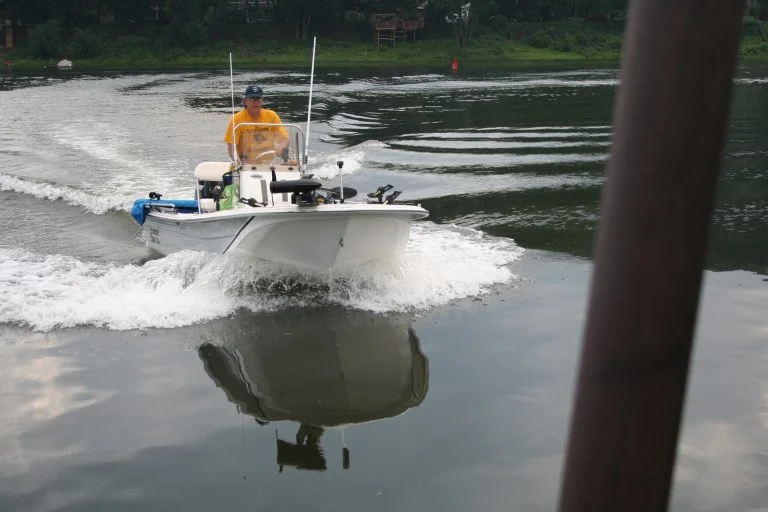
Quick answer: The most common Bayliner boat problems are wet or rotten core in the transom, stringers, or deck, plus gelcoat cracks, blisters, overheating, fuel-delivery faults, and electrical corrosion. Check structure first, because it decides whether the boat is safe and worth fixing. No verified brand-wide failure-rate data was found.
What Are the Most Common Bayliner Boat Problems?
The main concerns fall into five groups: water-damaged core in the transom, stringers, or deck; gelcoat cracks and blisters; engine overheating; fuel-delivery faults; and electrical corrosion. Structural damage comes first because it affects safety and resale value. Engine, fuel, and electrical faults are often easier to trace and repair.
| Problem | Warning sign | Likely cause | First check | Urgency |
|---|---|---|---|---|
| Wet or rotten core | Spongy deck, flexing transom | Water entering through fittings or drilled holes | Walk the deck and tap suspect areas | High |
| Stress cracks | Spreading or dark cracks at transom corners or chines | Structural stress or water reaching the core | Inspect crack location and look for flex | High if spreading or structural |
| Hull blisters | Soft or fluid-filled bumps | Possible water intrusion in the laminate | Have the area inspected before painting | Medium |
| Overheating | Temperature alarm or rising gauge | Blocked intake, worn impeller, low coolant | Shut down, then check the intake | High |
| Fuel-delivery fault | Sputtering, idle stalling, reduced power | Dirty filters, clogged injectors, bad fuel, air restriction | Inspect the fuel filter and check for water | Medium |
| Electrical corrosion | Intermittent gauges, lights, or pumps | Moisture, vibration, salt | Inspect terminals and wiring | Medium; immediate if hot or burning |
Most of these issues can affect any aging fiberglass boat. Age, storage, and maintenance history matter more than the badge alone. A neglected boat of any brand can be a poor buy, and a well-kept Bayliner can be a sound one.
Why Do Bayliner Boats Have a Mixed Reputation?
Bayliner built its name on value, and its reputation has long been tied to that price-first image. The first Bayliner boat was sold in 1957. In 1982, its Total Value Package bundled a boat, outboard motor, and trailer at a competitive price. By 1986, when Brunswick acquired the company, Bayliner was selling about 43,000 boats a year.
High sales volume also means many older boats and many owner stories. That may explain part of the brand’s visibility in complaints, but it has not been measured.
The strongest documented criticism comes from inside the industry. A February 2005 Boating Industry report quoted Taylor, discussing Bayliner under parent division U.S. Marine, as saying “boat quality needs to be worked on in a big way.” He also said durability needed work and described the problem as industry-wide.
The same report described these manufacturing changes at U.S. Marine:
- Lean Six Sigma and Five S experts
- Robots and water jets for cutting hull fiberglass
- Robotic gel coat application
- Closed molds for small parts
- Water tests on 10% of boats leaving the production line
These changes show what the company was doing at the time. They do not prove that every quality issue was solved.
Are Bayliner Boats Good Quality and Reliable?
No verified data settles this for the whole brand. Forum claims about thin hulls or bad model years could not be confirmed, so treat them as leads to investigate, not facts. Judge the individual boat by its records, structure, engine, and water test.
How Long Do Bayliner Boats Last?
No verified lifespan figure was found. A boat’s useful life depends on whether its structure has stayed dry, how it was stored, and how well its engine and drive were maintained.
How Can You Spot Transom, Stringer, and Deck Rot?
Start by checking anywhere water can get through the outer skin. Core is the material sandwiched between fiberglass layers. Stringers are the long beams that stiffen the hull. Water can reach structural materials through these common entry points:
- Loose or poorly bedded deck hardware
- Seat and rod holder bases
- Stanchions, hinges, and locker latches
- Holes drilled for outboards, sterndrives, and trim tabs
Use these screening steps:
- Walk the deck. Feel for soft or spongy spots, especially near seats and fittings.
- Tap with a small hammer. Solid, dry core sounds firm and crisp. Wet core sounds deep and hollow.
- Inspect the transom. Look for stress cracks and any flex around the engine or drive.
- Confirm with a surveyor. Hire a surveyor or lamination expert for a full hull inspection.
A healthy-looking skin can hide wet or delaminated core. A moisture meter or percussion sounding can reveal those areas. No authoritative pass-or-fail moisture percentage was confirmed, so let the surveyor interpret any readings.
Do Bayliner Boats Have Wood Stringers or Transoms?
Do not assume either way. Construction varies by model and year, so a particular boat may differ from one discussed online. Ask Bayliner or a dealer about the exact model year, and have a surveyor assess the actual boat.
Which Warning Signs Mean Stop Using the Boat?
Stop using the boat and get a professional inspection if you find any of these:
- A transom that flexes or feels spongy
- Stress cracks spreading around the engine or drive mount
- A soft deck or movement in seat or railing mounts
- Water entering the boat from an unknown source
Can a Wet Core Be Dried or Must It Be Replaced?
Wet core that has not rotted can sometimes be dried, but success is not assured. Power & Motoryacht cites a five-week average drying time, and one yard owner said drying works only about 25% of the time. Rotten core must be cut out and replaced.
Are Gelcoat Cracks and Hull Blisters Serious?
They can be, depending on location and feel. Gelcoat is the hard outer finish on fiberglass, and an isolated surface chip is usually cosmetic. Cracks at high-stress areas, such as transom corners and chines, deserve closer attention.
Look at the color of each crack. Dirty, darkly highlighted cracks may mean water is reaching the core. Investigate soft or fluid-filled blisters rather than painting over them, because paint can hide the evidence without fixing the cause.
Decision rule: Monitor isolated surface chips. Get an inspection for damage that is spreading, sits in a structural area, or feels soft.
Why Does a Bayliner Engine Overheat or Lose Power?
Overheating usually traces to a blocked water intake, a worn or broken impeller, or low coolant on a closed-loop system. Shut down rather than keep running hot. Overheating can warp cylinder heads, cause leaking head gaskets, and score cylinder walls.
Sputtering under load, stalling at idle, and reduced power can come from dirty fuel filters, clogged injectors, air intake restrictions, or water-contaminated fuel. Water contamination is a particular risk in partially filled tanks during the off-season.
Engines and drives vary by year, so follow the manual for your specific Mercury or other engine. Haynes suggests annual impeller replacement for regularly used outboard and sterndrive engines, but check that advice against your manual.
On sterndrives, inspect the bellows, gimbal bearing, and U-joints, and service them as the manual directs. A qualified mechanic should check any torn rubber, grinding, or roughness.
What Should You Check First If the Boat Overheats?
- Shut the engine down as soon as it is safe.
- Check the water intake for weeds, plastic, or mud.
- On closed-loop systems, let the engine cool, then check the coolant level.
- Inspect or replace the impeller according to the manual.
- If you cannot find the cause, do not keep running the engine. Arrange a tow and a mechanic.
What Should You Check First If It Will Not Plane?
- Check for excess weight, poor weight balance, and incorrect trim.
- Inspect the propeller for damage and the hull bottom for heavy growth.
- Inspect the fuel filter and look for water in the fuel.
- Check for air intake restrictions.
- Have a mechanic check for clogged injectors or engine faults if power is still low.
What Electrical Problems Should Bayliner Owners Watch For?
Watch for corrosion at terminals and along wiring. Moisture, vibration, and salt cause resistance, voltage drops, and equipment malfunctions. Intermittent faults often come before complete failure, so do not ignore a gauge or pump that works only some of the time.
A short maintenance routine helps:
- Disconnect the battery, then clean corroded terminals.
- Test the battery.
- Inspect wiring for chafing, green residue, and loose connections.
- Apply dielectric grease to suitable connections.
- Use marine-grade connectors for repairs.
Heat from electrical resistance can damage wire insulation. Burning smells or hot wiring need immediate professional attention. Do not keep using the circuit until it has been checked.
Have Bayliner Boats Been Recalled?
Yes. Two recall examples were found, but they are not a complete recall history:
- Model 3788: A USCG recall record titled Fuel Tank Leak lists 80 units, with a campaign opened 11/17/2004 and closed 1/19/2006. The record’s problem-description and remedy details are blank.
- 2010 195BR, 197SD, and 215BR: Some of these models with certain optional packages were recalled over navigation lights. The report does not give the specific fault, number of boats, or fix.
Check the USCG recall database using the boat’s hull identification number (HIN). Then contact Bayliner or a dealer and ask about any open campaigns for that exact boat.
What Does Bayliner’s Warranty Cover?
Coverage depends on the model year, boat type, and owner. Bayliner’s 2025 US/Canada warranty lists the terms below, compared here with reported terms from model year 2005. Confirm them against the current document.
| Coverage | Model year 2025 | Model year 2005 |
|---|---|---|
| Hull | Limited lifetime structural warranty for the original retail owner | Runabouts: lifetime limited. Cruisers and sport yachts: prorated 5-year |
| Second owner | Limited 10-year structural hull warranty, counted from the first retail purchase date | Not stated in the report |
| Deck | 5-year structural warranty | Runabouts: 5-year. Cruisers and sport yachts: prorated 5-year |
| Fuel system | Limited 2-year warranty | Not stated in the report |
A used boat’s coverage depends on its ownership history and original warranty document. Under the 2025 terms, the second owner’s hull period starts at the first retail sale, not at the second owner’s purchase.
Get the warranty for your exact model year and read its exclusions before assuming a repair is covered.
Should You Buy a Used Bayliner?
Buy one only after the records, a structural check, an engine and drive inspection, and a water test all support the asking price. If any of those is missing, the low price may not be a bargain.
What Should You Check Before Buying a Used Bayliner?
- HIN and recalls: Record the HIN and run a USCG recall lookup.
- Service records: Ask for engine, drive, impeller, and repair records.
- Deck: Walk it, tap suspect areas, and check around fittings.
- Transom: Look for flex, stress cracks, and poorly sealed holes.
- Overheating and fuel history: Ask about past alarms, repairs, stalling, and water in the fuel.
- Electrical condition: Test every system and inspect terminals and wiring.
- Water test: Confirm that the boat planes, holds temperature, and runs smoothly under load.
- Independent survey: Hire a surveyor who does not work for the seller.
When Should You Walk Away?
- The transom is soft or flexes.
- Stress cracks are spreading.
- A survey confirms wet structural core.
- The seller refuses a survey.
The trade-off is simple: a low purchase price can disappear quickly. One yard owner told Power & Motoryacht that core replacement more often costs five figures. Get a written repair estimate before you negotiate, and compare the total cost with a boat that has a clean survey.
Frequently Asked Questions About Bayliner Boat Problems
Does the Bayliner warranty transfer to a second owner?
Yes, under Bayliner’s 2025 US/Canada terms, a second owner gets a limited 10-year structural hull warranty. That period counts from the first retail purchase date, not the second owner’s purchase. Coverage on any used boat depends on its ownership history and original warranty document, so read the terms for that model year.
How often should you replace the impeller on a Bayliner?
Haynes suggests replacing the impeller every year on regularly used outboard and sterndrive engines. Check that advice against the manual for your specific engine, because engines and drives vary by year. A worn or broken impeller is a common cause of overheating, and overheating can warp cylinder heads and score cylinder walls.
Can a moisture meter find wet core in a boat?
Yes, a moisture meter or percussion sounding can reveal wet or delaminated core hidden under a healthy-looking fiberglass skin. However, no authoritative pass-or-fail moisture percentage was confirmed, so a single number should not decide the purchase. Let a surveyor or lamination expert interpret the readings and inspect the full hull.
Can you paint over hull blisters on a boat?
No, you should not paint over soft or fluid-filled hull blisters before they are investigated. Paint can hide the evidence without fixing the cause, and blisters may point to water intrusion in the laminate. Have the area inspected first, especially if the damage is spreading, sits in a structural area, or feels soft.
When is water in boat fuel most likely?
Water in boat fuel is a particular risk in partially filled tanks during the off-season. Contaminated fuel can cause sputtering under load, stalling at idle, and reduced power. If you notice those symptoms, inspect the fuel filter and check for water. Have a mechanic look further if power stays low.
What should you do if boat wiring smells like it is burning?
Get immediate professional attention if boat wiring is hot or smells like it is burning. Heat from electrical resistance can damage wire insulation, so do not keep using that circuit until it has been checked. Moisture, vibration, and salt can corrode terminals and wiring, which is a common source of that resistance.