
Quick answer: The most common 5.0 OMC Cobra problems are hard or failed shifting, a high idle speed, kinked or misrouted shift cables, overheating, fuel and spark faults, and stalling under load. Parts are harder to find because OMC went bankrupt in 2000. “Cobra” is the name of the sterndrive. The 5.0L engine is a GM 305 V8.
Outboard Marine Corporation (OMC) built the Cobra sterndrive, and the 5.0L was one of the engines it was paired with. OMC introduced the Cobra in 1985 after starting development in 1983. The line covers model years 1986 to 1993. OMC built the Cobra outdrives at its Lexington, Tennessee factory (source).
Many problems owners blame on “the engine” actually come from the outdrive, the shift system, or the cables between them. This guide covers both the engine and the drive.
What Is the 5.0 OMC Cobra? Is It a Chevy 305?
Yes. The OMC 5.0L is a GM 305 cubic inch (5.0L) V8. It is not an inline four-cylinder. The 153 cubic inch inline four is a different engine, the OMC 2.5L (source).
Keep these two parts separate when you troubleshoot or shop for parts:
- The engine: a GM small-block V8 that OMC marinized. Many internal parts are shared with the GM 305 family, so most marine and auto mechanics know it.
- The Cobra drive: OMC’s own sterndrive (outdrive), gimbal ring, transom housing and shift system. This is the part that is hard to find parts for.
OMC offered several Cobra engine versions in 1986-1993, including the 5.0L, 5.0L HO and 5.0 EFI. Specs differ between them, so always check your exact model and year before you adjust anything.
Did Volvo Penta Buy OMC Cobra?
Not exactly. OMC and Volvo Penta ran a sterndrive joint venture in the mid-1990s. In late December 1998, Volvo bought OMC’s share of that Lexington, Tennessee venture. Volvo Penta did not buy the rights to the engine itself, which was a GM block (source).
Here is what happened to OMC after that:
| Date | Event |
|---|---|
| Late December 1998 | Volvo buys OMC’s share of the sterndrive joint venture |
| December 22, 2000 | OMC files for bankruptcy |
| February 2001 | Bombardier Recreational Products (BRP) wins the Johnson and Evinrude outboard brands |
| 2001 | Genmar Holdings buys the OMC boat division |
| January 16, 2020 | Oak Point Partners buys the remaining OMC assets |
BRP took the outboard brands, not the Cobra sterndrive. No successor company makes new Cobra parts today.
9-Common Problems of 5.0 OMC Cobra Engine:
Many owners like the 5.0 OMC Cobra, but it has some problems that show up again and again. Most of them involve shifting, cables, cooling and fuel. Here are the common issues one by one, with the likely causes.
1. Gear Shifting Failure
Shifting complaints are the most common Cobra issue. Owners report a clicking or grinding sound when shifting into forward, even after the drive has been in reverse. The drive may also jump out of gear while making noise, and the problem keeps coming back.
Common causes:
- A shift cable that is out of adjustment, kinked, or worn.
- An idle speed set too high, which makes the gears engage hard.
- Worn clutch or shift parts inside the drive.
- A faulty shift interrupt (shift assist) switch.
Check the cheap items first: cable routing, cable adjustment and idle speed. Only then suspect internal drive damage.
2. High RPM when Engine Idle
A high idle is a frequent Cobra complaint, and it makes shifting worse. When the engine idles too fast, the gears slam together when you shift. You hear a hard clunk and feel a jolt.
Fast idle during warm-up can add to the problem. Hard engagement puts extra stress on the gears, the U-joints and the propeller shaft. Over time, this can lead to costly drive damage.
The fix is to set idle speed to the factory spec for your model. The correct number varies by engine version and year, so use the service manual. Check it in gear and in neutral with the engine fully warm.
3. Incorrect Routing of Transom Cable
Many owners find kinks in the transom shift cable, where the cable bends too sharply. A kink makes the inner core drag inside the sleeve. The shift then feels stiff or does not move far enough.
Routing near the starter is another weak spot. If the cable is routed wrong, the extra drag can trigger the shift assist system at the wrong time. That causes uncontrolled activation and rough shifts.
Look for smooth, gentle bends along the whole cable run. Replace a kinked cable. Straightening it rarely fixes the drag.
4. Repair is very Expensive
Repairs cost more than they should, mainly because drive parts are hard to find. Not every shop works on Cobra drives, so you may need to search for a mechanic who knows them.
OMC no longer exists and no successor makes new Cobra parts. Owners rely on aftermarket, used and rebuilt parts. The GM V8 engine is the easier half to fix. The Cobra drive is the harder half.
5. Various Failures of Shifting to the Neutral State
Some owners can shift from neutral into forward or reverse, but cannot shift back to neutral while the engine runs. They have to shut the engine off to get the drive out of gear.
This usually points to the shift interrupt switch, a high idle, or a cable that is out of adjustment. See the section on shifting out of gear below for what to check.
6. Engine Overheating Issue
Overheating is a common problem. Most of these engines are raw-water cooled. That means a pump pulls lake or sea water through the engine instead of using a car-style radiator. If that water flow slows or stops, the engine heats up fast, especially at high RPM.
Typical causes are a worn raw water pump impeller, a stuck thermostat, or clogged water passages or intakes. An overheating engine can also run rough, lose power and vibrate when you try to go fast.
Some owners also report that the boat will not reach full speed even though the engine seems to run well. Check prop condition, drive slip and engine RPM at wide-open throttle against the manual.
7. Bad Plug and Filter Problems in Engine Fuel Flow
After a few seasons, many owners report the engine dying suddenly. It may stall when you add throttle on the water, take a long time to restart, then only run at idle.
Loss of power at full RPM is also common. The usual causes are a clogged fuel filter, low fuel, stale fuel, or bad spark plugs. Start with a fresh filter and new plugs before chasing bigger problems.
8. Engine Cable Design Faulty
Owners often blame the cable setup for odd failures. Cable guides can be mounted wrong, and adjustment screws can work loose or be set incorrectly. A cable that slips or disconnects can leave you without proper shift or throttle control.
It may look like a minor issue, but it is widely reported. Check cable mounts, clips and adjustment screws as part of every season’s prep.
9. Engine Failure at Minimum RPM Rises
Some owners on boating forums report the engine shutting down suddenly at mid-range RPM, around 2800 RPM. This is a reported symptom, not a design limit.
Stalling under load usually traces back to fuel delivery (filter, pump, stale fuel), ignition (plugs, wires, distributor), or overheating. Work through those systems in that order.
What Is the Idle RPM for an OMC Cobra 5.0?
The correct idle RPM, ignition timing and wide-open-throttle RPM depend on the engine version (5.0L, 5.0L HO or 5.0 EFI) and the model year. Use the specs in the service manual for your exact engine. Do not copy a number from a forum post for a different model.
Two simple rules help:
- Check idle with the engine fully warm. A cold engine idles faster.
- If shifts clunk hard, check idle speed before you blame the drive.
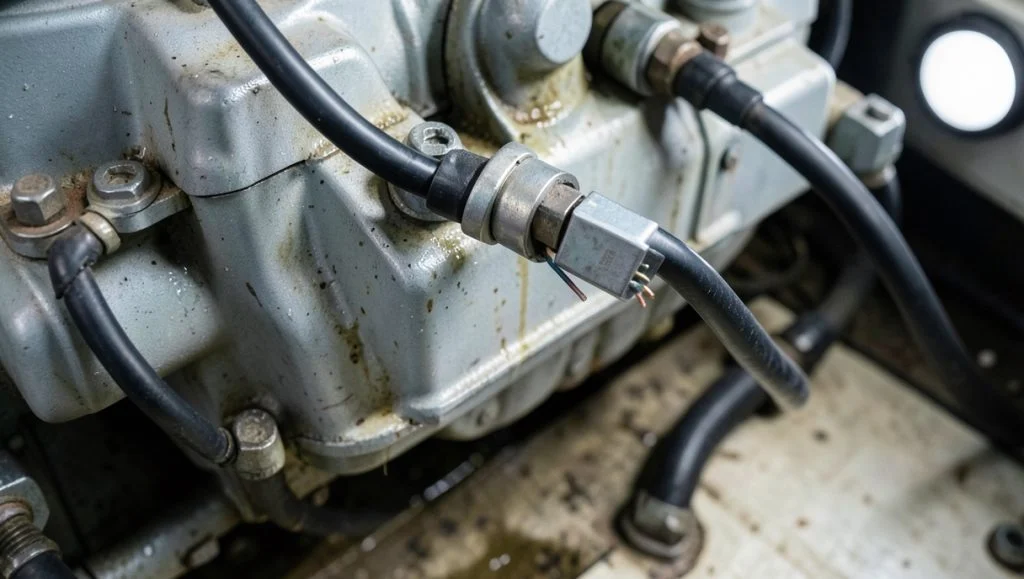
Why Won’t My OMC Cobra Shift Out of Gear?
When you shift out of gear, the gears are loaded and want to stay engaged. The Cobra uses a shift interrupt (shift assist) switch to help. It briefly interrupts ignition so the load drops and the drive can slip into neutral.
If the drive will not come out of gear, check these in order:
- Idle speed. Too high and the gears stay loaded.
- Shift interrupt switch. A bad switch or wiring means no ignition interrupt.
- Cable adjustment and routing. Kinks and drag stop the cable from moving fully.
- Internal drive parts. Worn clutch or shift parts need a drive teardown.
How Do You Adjust the Shift Cable on an OMC Cobra?
The exact measurements are in the service manual. The general process looks like this:
- Shut off the engine and remove the key.
- Put the remote control lever in neutral.
- Inspect the full cable run. Replace any cable with kinks, cracks or a stiff core.
- Confirm the drive is in neutral. The prop should spin freely in both directions.
- Adjust the cable end so it lines up with the shift lever without pushing or pulling it.
- Tighten all locknuts and clips.
- Shift through forward, neutral and reverse with the engine off. Check for full, even travel.
- Test on the water at idle. Confirm the drive shifts cleanly in and out of gear.
Cobra shift systems have both a remote cable and a transom (drive) cable. If adjustment does not fix the problem, check the transom cable and the shift interrupt switch next.
How Do You Prevent Cobra Overheating?
Keep the raw water flowing. Most overheating starts with three parts:
- Raw water pump impeller: The rubber vanes wear, crack or harden with age and dry running. Replace it on a regular schedule and any time the engine has overheated. Check the manual for its location on your model.
- Thermostat: A stuck thermostat blocks flow. Replace it if temperatures run high or swing up and down.
- Water intakes and passages: Weeds, sand and scale block flow. Clear the intakes and flush the engine.
Never run the engine out of the water without a water supply. Even a short dry run can ruin the impeller.
Why Do Gimbal Bearings, Bellows and U-Joints Matter?
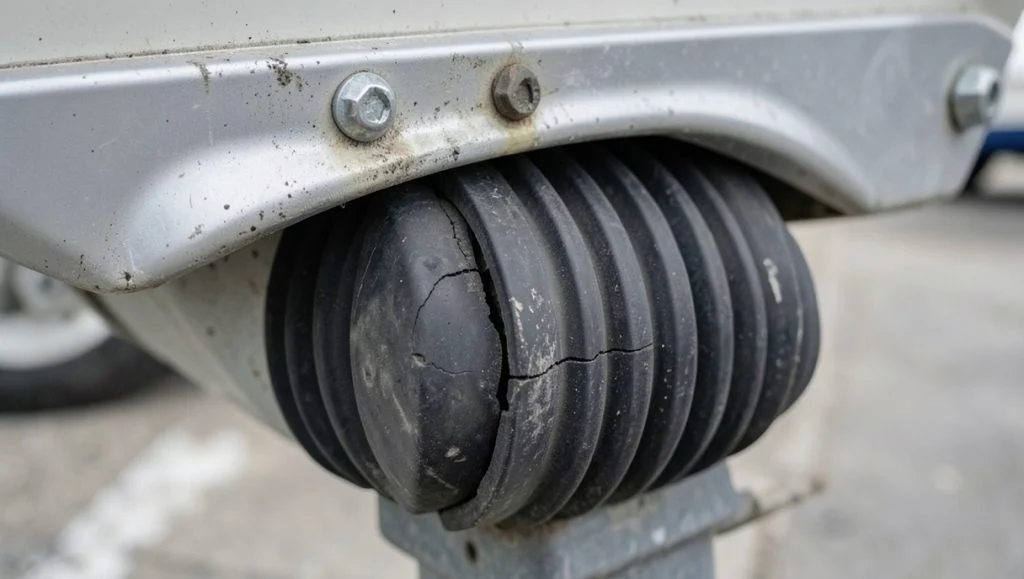
The bellows are rubber boots that seal the gap between the transom housing and the drive. When they crack, water gets into the boat and onto the gimbal bearing and U-joints. Water causes rust, bearing noise and joint failure.
Watch for these warning signs:
- Cracked, dry or soft bellows.
- Growling or rumbling from the drive area, especially when turning.
- Water in the bilge with no other obvious source.
- Clunks or vibration when the drive is trimmed up.
Inspect the bellows every season and replace them at the first sign of cracking. A bellows job costs far less than a gimbal housing or a sunk boat.
Are OMC Cobra Parts Still Available?
Yes, but not new from OMC. OMC filed for bankruptcy on December 22, 2000, and no successor makes Cobra parts. Your options are:
- Engine parts: Many internal parts fit the GM 305 family. Use marine-rated parts for the starter, alternator, fuel and ignition systems.
- Aftermarket drive parts: Aftermarket brands such as Sierra sell common service parts like impellers, gaskets and bellows.
- Used parts: Salvage yards and online sellers part out old drives.
- Rebuilt drives: Shops that specialize in Cobra drives rebuild and sell complete units.
Hard parts inside the drive, such as gears, are the hardest to find. Have your drive’s model and serial number ready before you shop.
Can You Replace an OMC Cobra Outdrive With a Mercruiser Alpha?
It can be done, but it is a conversion, not a bolt-on swap. A different brand of outdrive needs its own transom assembly and shift system. That means more parts and labor than replacing the Cobra drive with another Cobra drive.
Some owners choose a full repower to a current Mercruiser or Volvo Penta package instead. Get written quotes for each option before deciding. Ask the shop exactly which parts the conversion includes.
Should You Repair or Replace the Drive?
Use these decision rules:
- Repair if the engine runs well and the drive needs service items like bellows, an impeller, cables or seals.
- Buy a rebuilt Cobra drive if the gears or internal shift parts fail and the transom assembly is still good.
- Convert or repower if both the drive and the transom assembly are worn, or you cannot find drive parts.
- Consider replacing the boat if repair quotes come close to the boat’s value and the hull or engine also need major work.
When Should You Stop Running the Engine?
Shut the engine down right away if you see any of these:
- The temperature gauge climbs or the overheat alarm sounds.
- Oil pressure drops.
- You smell fuel or see fuel in the bilge.
- Loud grinding comes from the drive.
Carbon monoxide warning: Gasoline engines make carbon monoxide, a gas you cannot see or smell. Never run the engine in an enclosed space. Keep people away from the exhaust area at the stern. Make sure your boat’s CO detectors work.
Overall Repair Guide
Your OMC 5.0 Cobra can fail for several common reasons, so keep a service manual on hand. Factory OMC manuals exist. The widely sold Clymer (Haynes) OMC Cobra 1986-1993 manual covers the 5.0L, 5.0L HO and 5.0 EFI (source).
The Clymer manual also covers the Cobra drive, gimbal ring and housing, cooling system, thermostat and water pump. Its troubleshooting section covers fuel, ignition, overheating and oil pressure. Use the troubleshooting section to narrow down the cause, but follow the full repair steps and specs for the actual fix.
Advantages of 5.0 OMC Cobra Engine
- The engine is a GM 305 V8, a block most mechanics know well.
- Many engine parts are shared with the GM small-block family.
- Common service parts for the drive are sold by aftermarket brands.
- This engine has a manual and troubleshooting section.
Disadvantages of 5.0 OMC Cobra Engine
- Drive parts are hard to find, and Cobra-savvy mechanics are rare.
- The engine has Overheating issue
- Some owners report stalling under load at mid-range RPM.
- Idle engine at high RPM
- Various gear shifting problems
Final Verdict
The OMC 5.0 Cobra has well-known weak spots: shifting, cables, idle speed, cooling and fuel delivery. Most fixes start with simple checks. The bigger challenge is the Cobra drive itself, because OMC is gone and drive parts are scarce. Mechanics who know these drives are rare, which raises repair costs.
In this article, we have shared the most common problems of the OMC 5.0 Cobra engine. If you face a different problem with your OMC 5.0 Cobra, share it with us in the comment box. We would love to hear from you.
Related Posts:
- Most Common Problems With Volvo Penta KAD44
- Most Common Problems with Cat C9 Engine
- 8 Most Common Problems with Armorseal 8100
- Most Common Problems with Boat Gas Tank Vent
Frequently Asked Questions
What year did OMC stop making the Cobra outdrive?
The OMC Cobra line covers model years 1986 to 1993. OMC introduced it in 1985 and built the drives in Lexington, Tennessee. OMC filed for bankruptcy on December 22, 2000. No successor company makes new Cobra parts today, so owners rely on aftermarket, used and rebuilt parts.
Why does my OMC Cobra clunk when I shift into gear?
A hard clunk when you shift into gear usually means the idle speed is too high. A fast idle makes the gears slam together. This stresses the gears, U-joints and propeller shaft. Set idle to the factory spec for your model with the engine fully warm. Then check the shift cable adjustment.
Why does my 5.0 OMC Cobra stall when I give it throttle?
Stalling under throttle usually comes from fuel delivery, ignition or overheating. Check the fuel filter, fuel pump and fuel age first. Then check the spark plugs, wires and distributor, and then the cooling system. Some owners report shutdowns around 2800 RPM, but that is a reported symptom, not a design limit.
What service manual covers the OMC Cobra 5.0?
The Clymer (Haynes) OMC Cobra 1986-1993 manual covers the 5.0L, 5.0L HO and 5.0 EFI. It also covers the Cobra drive, gimbal ring and housing, cooling system, thermostat and water pump. Factory OMC manuals also exist. Use the manual for the exact idle, timing and cable specs for your engine.
How often should you check OMC Cobra bellows?
Inspect the bellows every season and replace them at the first sign of cracking. Cracked bellows let water into the boat and onto the gimbal bearing and U-joints. That water causes rust, bearing noise and joint failure. A bellows job costs far less than a gimbal housing repair.
Is the 5.0 OMC Cobra raw-water cooled?
Yes. Most 5.0 OMC Cobra engines are raw-water cooled. A pump pulls lake or sea water through the engine instead of using a radiator. If the impeller wears out, the thermostat sticks, or the intakes clog, the engine overheats fast. Never run it out of the water without a water supply.
