
Quick answer: Yes. Contender boats are good, especially for serious offshore fishing. The family-owned Florida builder has made semi-custom center consoles since 1984. It uses hand-laid fiberglass, vinylester resin and glass stringers instead of wood. The trade-offs are a high price and fishing-first layouts that offer less family comfort than crossover boats.
Are Contender Boats Good and Reliable?
Contender boats are good quality. Contender is a well-regarded Florida builder of semi-custom offshore fishing center consoles. Founder Joe Neber has run the company since he started it in 1984.
Three things drive its reputation. The hulls are hand-laid fiberglass with vinylester resin and a glass stringer system. The deep-V and stepped hulls are designed for rough offshore water. The bigger models are built for competitive tournament fishing.
The main trade-off is simple. These are fishing-first boats with premium prices. If you want a family cruiser with plenty of lounge seating, a Contender is probably not the right fit.
Who Builds Contender Boats and Where Are They Made?
Joe Neber owns Contender Boats. He founded the company in 1984 in Miami, Florida, with a focus on offshore fishing boats. He is still president and stays closely involved in design and production.
Contender boats are made in Florida at two plants:
- Homestead, FL: builds the larger boats.
- Fort Pierce, FL: builds boats 32 feet and under. Contender bought this plant of about 100,000 square feet in 2021 to double its output.
Why Does Family Ownership Matter?
Contender is a family-owned company, not part of a large boat group. That usually means one leadership team sets the build standards and keeps them over time. Design choices are less likely to shift with a new corporate owner.
Contender has also invested in support. In 2021 it reported nearly 10,000 owners worldwide. It added a dedicated quality assurance manager and a customer service representative that year.
What Industry Recognition Has Contender Earned?
In May 2026, the Center for Sportfishing Policy gave Joe Neber its 2026 Eddie Smith Manufacturer of the Year Award. It is the group’s highest recognition for marine innovation, leadership and conservation.
How Are Contender Boats Built?
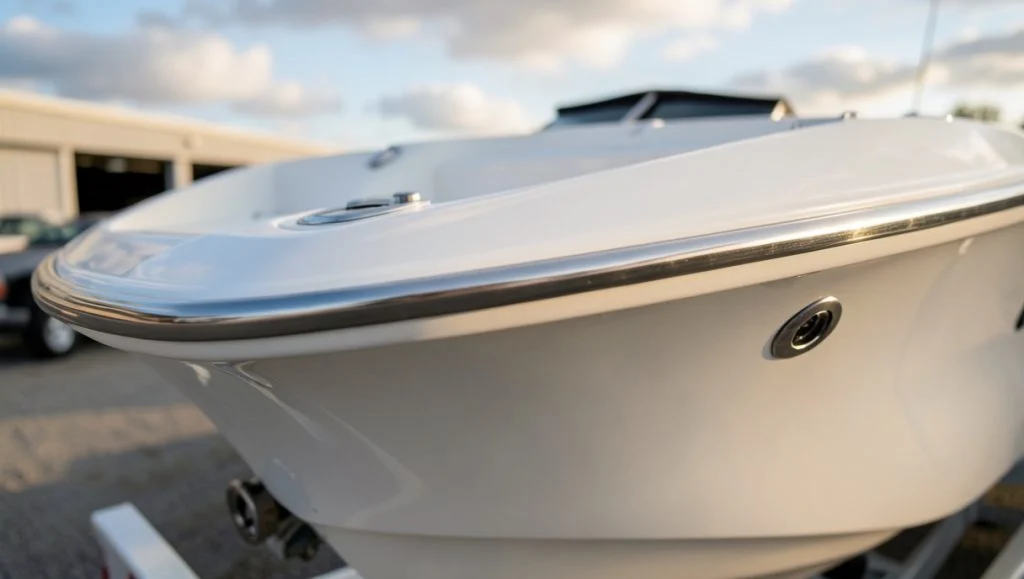
Contender hulls are hand-laid fiberglass using multi-directional fabrics. They use a foam-cored solid glass stringer system, vinylester resin and specially formulated gelcoats.
Multi-directional fabrics run fibers in more than one direction. That helps the laminate handle loads from many angles, which matters when a hull slams through waves.
What Is a Vinylester Hull?
A vinylester hull uses vinylester resin to bind the fiberglass. Vinylester resists water better than standard polyester resin. Better water resistance helps protect the laminate over years of saltwater use.
Do Contender Boats Use Wood?
Contender’s stringer system is foam-cored solid glass, not wood. Stringers are the long beams that stiffen the hull. Glass stringers won’t rot like wood stringers can when water gets in.
Coring materials in decks and other parts can vary by model and year. If you’re buying an older boat, ask the dealer or your surveyor what was used in that hull.
Is Contender Switching to Infusion?
Contender said it planned to move entirely to infusion lamination at the Fort Pierce plant. Infusion pulls resin through dry fabric under vacuum instead of applying it by hand.
Because methods may differ by plant and year, ask the dealer which process was used on the exact boat you’re considering. This matters most on smaller models and recent builds.
How Do Contender Boats Ride Offshore?
Contender boats ride well offshore. That is the main reason people buy them. The 39 ST is a good example. Boats.com says Contender designed it for big-water competitive tournament fishing.
The 39 ST has a two-step deep-V hull with 24.5° of deadrise. Saltwater Sportsman described the ride as well-mannered. In its test, the boat:
- Handled quartering and head seas smoothly with little spray.
- Ran down-sea without stalling.
- Showed good stability while drifting.
How Fast Is the Contender 39 ST?
With triple Yamaha 300 outboards, Saltwater Sportsman recorded these results:
| RPM | Speed | Fuel burn |
|---|---|---|
| 4,000 | Just over 44 mph | 34 gph |
| 4,500 | About 49 mph | 41 gph |
Source: Saltwater Sportsman 39 ST review. Your numbers will vary with load, sea state and engines.
What Is a Stepped Hull?
A stepped hull has notches across the bottom that let air in under the boat. The air cuts drag, so the boat can run faster and more efficiently. The trade-off is that stepped hulls handle differently in hard turns. New owners should practice turns at moderate speed before pushing the boat.
How Much Range Do Contender Boats Have?
The large models carry a lot of fuel. The 39 ST holds 500 gallons. The 44 ST has a 600-gallon fuel tank. Big tanks let you run far offshore and still keep a fuel reserve.
What Contender Models Are Available?
Contender’s lineup runs from mid-20-foot center consoles to 44-foot offshore boats. The table shows only specs we could verify. Other cells are general guidance only.
| Model | Size class | Verified specs | Who it may suit |
|---|---|---|---|
| 25T | Mid-20s ft | General use only: see contenderboats.com | Buyers who want the brand in a smaller, easier-to-tow size |
| 28T | High-20s ft | General use only: see contenderboats.com | Anglers stepping up from a smaller boat |
| 32ST | Low-30s ft | General use only: see contenderboats.com | Owners who want more offshore range in a mid-size boat |
| 39ST | Upper-30s ft | LOA 39’1″, beam 10’8″, 24.5° deadrise, 500 gal fuel, 1,400 max HP, 24″ draft, about 15,400 lb loaded | Tournament and big-water anglers |
| 44ST | Mid-40s ft | 600 gal fuel; test boat had triple Yamaha 425 XTO outboards | Long-range offshore anglers |
| 44FA | Mid-40s ft | General use only: see contenderboats.com | Check layout with a dealer |
Sources: 39 ST specs, 44 ST specs. For current specs, options and pricing, check contenderboats.com or a Contender dealer.
What Are the Downsides of Contender Boats?
Contender’s weak spots are cost, comfort and the learning curve. None are build-quality problems, but they decide whether the boat fits your life.
How Much Does a Contender Boat Cost?
Contender boats are expensive. Saltwater Sportsman listed a base price of $313,315 for the 39 ST with triple Yamaha 300s. That is an older review figure. Current prices are higher. Get a written quote from a dealer for the exact model, engines and options you want.
Other Trade-Offs to Weigh
- Less family comfort: Fishing-first layouts usually give up seating and lounging space compared to crossover or bay boats.
- High running costs: Multi-engine rigs burn a lot of fuel. The 39 ST used 41 gph at about 49 mph. Every extra outboard also adds service cost.
- Stepped-hull learning curve: Stepped hulls can surprise drivers in tight, fast turns. Take time to learn the boat.
- Age of used boats: Older Contenders need the same checks as any used boat. Condition depends on how the boat was used and maintained.
What Is the Warranty on a Contender Boat?
Warranty terms can change by model year, and engines are usually covered separately by the engine maker. Ask the dealer or Contender for the current written warranty before you buy. On a used boat, ask whether any coverage transfers to a second owner.
What Should You Check Before Buying a Used Contender?
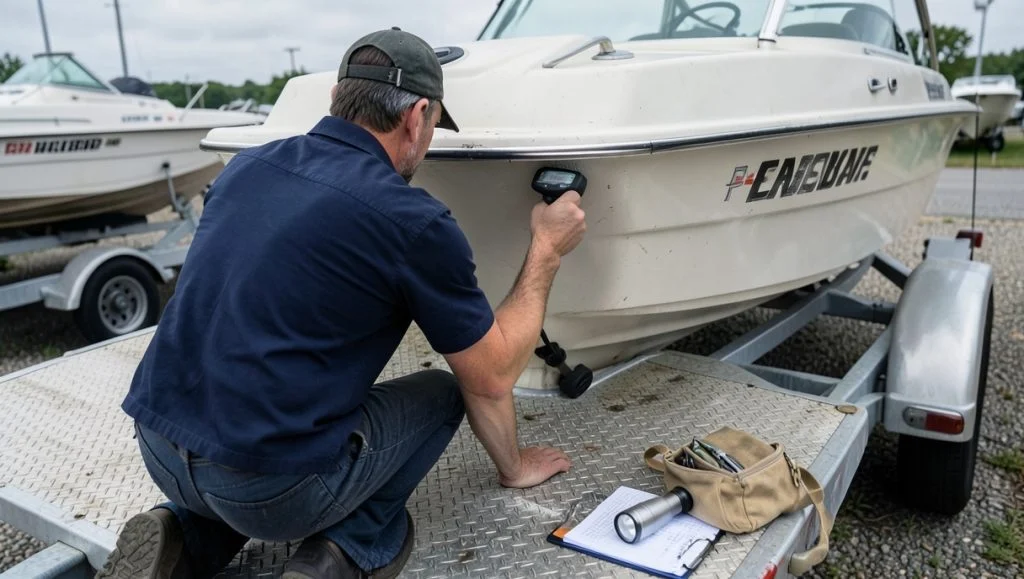
Treat a used Contender like any used offshore boat: verify condition instead of trusting the brand name. Follow these steps:
- Hire a marine surveyor. Ask for moisture readings on the deck and transom.
- Check every engine. Get hours and service records for each outboard. On twin, triple or quad rigs, repair costs multiply.
- Inspect the gelcoat. Look for stress cracks, especially around hardware, the console and high-load areas.
- Check hardware bedding. Loose or poorly sealed fittings can let water into the deck.
- Inspect the fuel system. Check the fuel tank, fuel lines and fittings for leaks or corrosion.
- Test steering and electrical. Run every pump, light, electronic unit and switch. Feel for stiff or loose steering.
- Confirm the hull ID and year. Make sure the hull identification number matches the title and registration.
- Ask about warranty transfer. Check with the dealer or Contender whether any coverage carries over.
- Sea trial in real chop. A flat-water run won’t show how the hull, engines and steering behave in the conditions you’ll actually fish.
Is a Contender Worth the Money? Decision Rules
A Contender is worth the money if you use it the way it was designed: offshore, often and for fishing.
Buy a Contender If You:
- Run offshore often and need a dry, controlled ride in rough water.
- Fish tournaments where speed and range matter.
- Want long range from large fuel tanks.
- Can afford the purchase price plus multi-engine fuel and service costs.
Skip a Contender If You:
- Mostly cruise inshore, sandbar or tube with family.
- Want lots of plush seating and creature comforts.
- Have a tight budget for the boat or for ongoing fuel and upkeep.
- Rarely go offshore, so you wouldn’t use the hull’s main strength.
Contender vs. Yellowfin: Which Is Better?
We haven’t reviewed Yellowfin, so we won’t pick a winner here. Both are Florida-built offshore fishing center consoles. Compare them on the points that matter to you:
- Hull design and how it rides in your usual sea conditions.
- Build method, resin and stringer materials for the model year.
- Dealer location and service support near you.
- Written warranty terms and current dealer quotes.
The best test is to sea trial both brands back to back in the same chop, with similar engines and a similar load.
Contender Boats FAQ
What is the smallest Contender boat?
The smallest model in Contender’s lineup is the 25T, a center console in the mid-20-foot range. It suits buyers who want the Contender brand in a smaller, easier-to-tow size. Contender builds boats 32 feet and under at its Fort Pierce, Florida, plant. Check contenderboats.com or a dealer for current specs.
What is the biggest Contender boat?
Contender’s largest boats are the 44-foot models, the 44 ST and the 44FA. The 44 ST carries a 600-gallon fuel tank, and its test boat ran triple Yamaha 425 XTO outboards. It is aimed at long-range offshore anglers. Ask a dealer to walk you through the 44FA layout before you choose.
What is the deadrise on the Contender 39 ST?
The Contender 39 ST has 24.5 degrees of deadrise on a two-step deep-V hull. It measures 39 feet 1 inch long with a 10-foot-8-inch beam and a 24-inch draft. It holds 500 gallons of fuel and is rated for up to 1,400 horsepower. Contender designed it for big-water tournament fishing.
Is a Contender a good family boat?
A Contender is usually not the best choice for family boating. Its fishing-first layouts give up seating and lounging space compared to crossover or bay boats. If you mostly cruise inshore, visit sandbars or go tubing, a family-focused boat will likely fit better. Choose a Contender if offshore fishing is your main use.
Is a Contender a good boat for a first-time owner?
A Contender can work for a first-time owner, but it asks more of you than most boats. Stepped hulls handle differently in tight, fast turns, so practice at moderate speed first. Multi-engine rigs also bring high fuel and service costs. Budget for both, and take time to learn the boat before pushing it.
How many people own Contender boats?
Contender reported nearly 10,000 owners worldwide in 2021. That same year, the company added a dedicated quality assurance manager and a customer service representative to support them. It also bought a Fort Pierce, Florida, plant of about 100,000 square feet to double its output of boats 32 feet and under.

Leave a Reply