Quick answer: The most common Evinrude E-TEC problems are failure to start, sudden shutdown, weak performance or stalling at idle, and unusual noise or vibration. Most trace back to fuel supply (stale fuel, closed vents, clogged filters, a bad fuel pump), the oil injection system, or worn parts. BRP stopped making E-TEC outboards in 2020 but said it would keep supplying service parts.
Evinrude E-TEC outboards are direct-injection two-stroke engines made by BRP. BRP stopped producing Evinrude E-TEC and E-TEC G2 outboards in late May 2020. Any new unit you find is leftover dealer stock. For most buyers, a used engine is the main option.
Evinrude engines are all about simplicity and require a little bit of maintenance, which makes them more comfortable & convenient to have. You still need to do routine checks between dealer services.
In this article, I will walk you through the most common problems you might have with an Evinrude E-TEC, what causes them, and what you can safely fix yourself. I will also cover warnings, oil, service intervals, winterizing, and where to get parts now that production has ended.
| Problems | Reasons |
| Engine Fails To Start | Low fuel or stale/dirty fuel in the fuel tank Low or empty oil tank, or an oil injection fault Fuel tank vent closed or fuel line not primed Wet Engine |
| Engine Abruptly Shuts Down & Does Not Re-Start | Slight leakage or broken fuel pumpClogged fuel tankDamaged fuel injectordebris caught on the propeller or kinks in the fuel hose |
| Weak Or Poor Engine Performance | Damaged or faulty fuel pumpClogged fuel and air filters |
| Unusual Noise Or Vibrating Sounds | Loose components or damaged exhaust systemEngine rattlesLoose connection |
How Is an E-TEC Different From a Carbureted Outboard?
An E-TEC does not have a carburetor. A computer called the EMM (Engine Management Module) controls fuel injection directly into each cylinder. Oil is not mixed into the gas. It comes from a separate oil tank and is fed by an oil injection system.
This matters when you troubleshoot. Many online fixes are written for older carbureted outboards. Adjusting mixture screws, cleaning carburetor jets or changing a premix ratio do not apply to an E-TEC. On an E-TEC, focus on fuel supply, oil supply, battery power and the engine’s warning system.
4 Common Evinrude E Tec Problems:
1. Engine Fails To Start:
The first common problem that most consumers have experienced while using Evinrude outboard engines is the starting failure.
Some users even specifically mentioned that the engine cranks like normal but does not start.
There can be various reasons behind this particular commotion, but the first and foremost task is to do the proper investigation because most outboard motor issues are interconnected.
Possible Fix
The best way to solve such interconnected issues is to try the following quick fixing options.
Possible reasons for engine starting failure…
A shortage of fuel or stale, dirty fuel in your fuel tank can cause this problem. A low oil tank or a fault in the oil injection system can be another potential reason.
Firstly, check the fuel level in your fuel tank. If the fuel is low, stale or contaminated, drain or use up the bad fuel and add fresh fuel.
Next, check the separate oil tank. On an E-TEC, oil and fuel are stored apart. If the oil tank is low, refill it with the recommended oil. Do not add oil to the gas tank to fix a “mix.” The engine is not built to run on premixed fuel in normal use.
You may check on your motor’s fuel cap vent and make sure it is open. Then squeeze the primer bulb on the fuel line until it feels firm, so fuel reaches the engine.
Check the battery and connections too. The EMM and injectors depend on steady electrical power. A weak battery or loose, corroded terminals can cause slow cranking or a no-start.
Evinrude outboard motor can stop responding when the engine is wet.
So, another quick fix for you is to open your engine cover and if you see it is wet as suspected, let the engine entirely dry off. Then, try again to start it.
If the engine still won’t start after these checks, look at the gauge for warning lights and note any warning horn. Those alerts point to the system that needs attention.
2. Engine Abruptly Shuts Down & Does Not Re-Start:
According to the user’s experiences, the engine abruptly dies without any warning during the ride, and when they try to re-start the engine, it does not start again.
Some also mentioned that initially, the motor begins like usual and runs fine for a while before they experienced the sudden abnormality
However, I will try to list down the possible reasons behind that commotion and explain the quick fixes that you can try to solve the problem.
Possible Fix
If the outboard motor suddenly stops and after several attempts, it does not re-start again, possibly the main culprit is the fuel pump.
Generally, the fuel pump is responsible to pump the gas to your outboard engine when needed to keep the engine active.
But when the fuel pump has slight leakage or broken, it will fail to pump the gas into the engine and cause the engine to shut off.
In that case, thoroughly investigate the fuel pump and either repair or replace the fuel pump based on the damage level.
Clogged fuel tank is another common reason for such type of problem…
While inspecting your fuel line and tank vent for possible faults, look for the fuel line ball and try to squeeze that. If you notice it has collapsed, that is a clear indication of the clogged fuel tank.
It often happens when the portable fuel tank contains a screw-type vent and the screw is closed.
Therefore, look at your vent screw, and if it is turned off turn it on. Now try to run your outboard engine once again.
For the installed tank’s clogged issue, you have to check the fuel tank vent for mud wasps nest in there. You can also ream the vent to break the existing mud nest and clear the line.
Check your fuel filters and tank vent regularly, especially after the boat has sat unused, to keep the line clear of nests and debris.
Another possible reason can be the fuel injector damage…
If you have a broken or damaged fuel injector, it will eventually force your outboard motor to die. The first and foremost task is to confirm the problem.
To inspect you need to put your ear next to the injector and listen attentively. If you can hear the clicking sound, that means your injector is perfectly working.
But if you cannot hear any clicking sound, it means you need to fix or replace it and you will have to call or hire a professional mechanic for this particular task. Do not touch or probe injector wiring while the engine is running or cranking.
Kinks on the fuel line hose or any debris caught in the propeller can also cause this commotion.
So, make sure to check and inspect for those issues.
3. Weak Or Poor Engine Performance:
Another often encountered issue with Evinrude E Tec outboard motors is their poor or weak performance, especially after several years of use.
After five or ten years of use, many users encountered that their engine started running slow or sluggishly and often stalls when they set it idle on neutral gear.
Over time any engine or motor of any vehicle can have that performance issue that is also natural and unavoidable.
Possible Fix
The most obvious reason behind any outboard or boat motor’s weak or low-performance level is the damaged or faulty fuel pump.
The fuel pump supposes to pump the constant fuel flow to the engine, but if it fails to deliver that constant flow, your engine will start running slow.
When the internal fuel pump becomes faulty, it cannot function accurately and starts performing within a limited capacity. You need to check and repair or replace your fuel pump if needed.
Also, remember to check the air and fuel filters inside your fuel compound.
If the fuel or air filters are clogged, the engine will eventually get affected. So, make sure none of the filters are damaged or clogged with debris.
Why Does My E-TEC Stall at Idle?
Stalling at idle usually means the engine is not getting a steady supply of clean fuel. Check these in order:
- Is the tank vent open, and does the primer bulb stay firm?
- Is the fuel fresh, with no water in it?
- Are the fuel filters clean?
- Are the fuel hoses free of kinks, cracks and loose clamps?
- Is the battery strong and are the connections tight?
- Is any warning light or horn active?
If all of these check out and it still stalls, the cause may be an injector, fuel pump or sensor. That needs dealer diagnostic software to confirm.
Fuel Quality: Ethanol and Water in Fuel
Ethanol-blended gas can absorb moisture over time, and water in fuel causes rough running, stalling and hard starts. Use fresh fuel, keep the tank fuller during storage to reduce condensation, and use a fuel stabilizer if the boat will sit.
A water-separating fuel filter between the tank and the engine catches water before it reaches the injection system. Drain or replace it as its maker directs. If you see water in the filter bowl, check the tank too.
4. Unusual Noise Or Vibrating Sounds:
Unusual or excess sounds coming from the engine are always a red alarm for the outboard owner.
Some of the Evinrude outboard motor users have experienced that too, but they have also mentioned that they encountered this trouble after using the motor for several years.
Honestly, that happens with almost all products that we purchase because as the product gets older, its parts slowly get wear off, broken, or even clogged.
However, it does not mean that you should not get concerned and look for possible fixing options.
Possible Fix
If you notice abnormal vibrating noises coming from the motor, do not panic and calmly follow my suggestions.
Remember, these excess loud noises occur on Evinrude outboard motors when the exhaust system has any loose components or gets damaged.
Therefore, you need to do a thorough investigation of your entire exhaust system. If the exhaust system or the line gets clogged, it causes such noises.
In that case, you need to hire a professional to repair or replace the whole exhaust system.
Also, examine whether the engine is rattling or the connections are secured and tightened in places accurately.
It can also happen because of the loose screws or bolts connections on the engine’s internal and external body parts. So, inspect every connection properly and tighten them, if required.
Vibration can also come from a bent or damaged propeller. If the noise is a knock from inside the engine, stop running it and have a technician check it.
What Do the Evinrude E-TEC Warning Beeps Mean?
Warning beeps mean the EMM has detected a problem, such as low oil, no oil, overheating or a sensor fault. The horn works together with the gauge. On boats with a SystemCheck gauge, a warning light shows which system has the problem.
Horn patterns and gauge lights differ by model and gauge type. Use your owner’s manual to match the beep pattern to the fault. Do not guess.
- Steady or repeated horn while running: Throttle back and check the gauge right away.
- Oil warning: Check the oil tank level. Do not keep running the engine without oil.
- Temperature warning: Check the telltale water stream and stop if it is weak or missing.
The EMM also stores fault codes. A dealer can read them with Evinrude diagnostic software, which shows faults that the gauge alone cannot explain.
What Oil Does an Evinrude E-TEC Use?
BRP recommends Evinrude XD100, XD50 or XD30 oil for E-TEC engines. TC-W3 oil is acceptable if those are not available. The oil goes in the separate oil tank, not in the gas tank.
The oil injection system pumps oil to the engine based on demand. Common oil-related problems include:
- An empty or low oil tank that triggers the low-oil warning.
- Air or debris in the oil lines.
- A failing oil pump or a sensor fault.
If the oil warning stays on after you refill the tank, treat it as a possible oil pump or sensor fault. A two-stroke engine without proper oil can be damaged quickly, so have a dealer check it before you run the engine hard.
Why Is My E-TEC Overheating?
Overheating usually means not enough cooling water is moving through the engine. The most common causes are a worn water pump impeller, a blocked water intake, or a stuck thermostat.
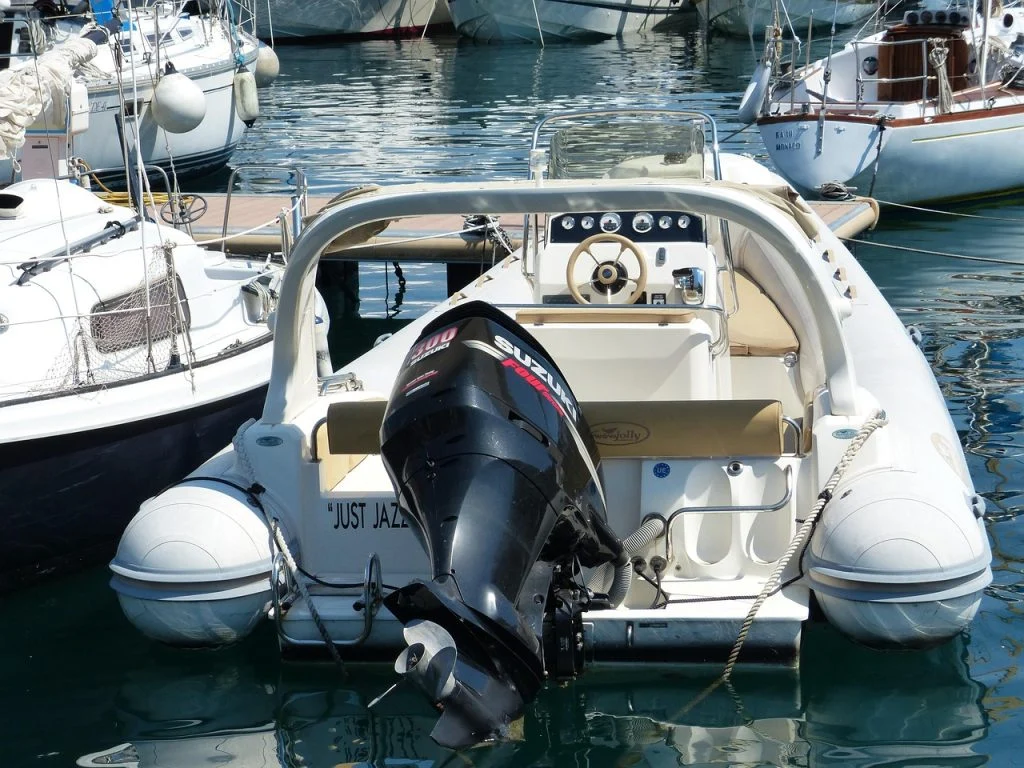
- Watch the telltale stream (the small jet of water from the engine). A weak or missing stream means poor water flow.
- Shut the engine off and check the lower unit water intakes for weeds, plastic or mud.
- Clear the telltale outlet with a thin wire. Sometimes only the outlet is clogged.
- If flow is still weak, the impeller or thermostat likely needs service.
Do not keep running an engine that is overheating. Rubber impellers wear with age and use, so include the impeller in your regular service.
What Causes E-TEC Electrical and Charging Problems?
Because the E-TEC is computer-controlled, it is sensitive to weak power. Common electrical causes of trouble are:
- Weak or old battery: Can cause slow cranking, no-start or odd warnings. Charge or load-test it first.
- Corroded or loose cables: Clean and tighten the battery terminals and ground connections.
- Charging system fault: If the battery keeps going flat while you run the engine, the stator or charging circuit may be failing.
- EMM fault: The engine computer can fail, but rule out the battery and wiring first. Only a dealer can confirm an EMM problem.
E-TEC vs. E-TEC G2: What’s Different?
The E-TEC G2 is the newer generation of Evinrude’s direct-injection outboard. Both share the same basic design: direct fuel injection with a separate oil injection system. That means the fuel, oil, cooling and electrical checks in this article apply to both.
One clear difference is service timing. The G2 has a longer dealer maintenance interval than the original E-TEC. See the table below.
How Often Does an Evinrude E-TEC Need Service?
An original E-TEC needs dealer-scheduled maintenance every 3 years or 300 hours. An E-TEC G2 needs it every 5 years or 500 hours, according to Salt Water Sportsman. These are not “no maintenance” periods. You still need routine owner checks between visits.
| Model | Dealer maintenance interval |
| Original E-TEC | Every 3 years or 300 hours |
| E-TEC G2 | Every 5 years or 500 hours |
Between dealer visits, check these yourself:
- Oil tank level before every trip.
- Telltale water stream every time you start the engine.
- Fuel filters, water separator and fuel hoses.
- Battery charge and cable connections.
- Propeller condition and any fishing line wrapped behind it.
- Lower unit for oil leaks or milky gear oil, which can mean water is getting in.
For exact intervals on spark plugs, the water pump impeller and lower unit gear oil, follow the owner’s manual for your model and your dealer’s advice. Boats used hard or in salt water may need checks sooner.
How Do You Winterize an Evinrude E-TEC?
Evinrude outboards have an Auto Winterization/Storage mode. It lets owners fog the cylinders without a dealer visit. Fogging coats the inside of the engine with oil to help prevent corrosion during storage. Follow the owner’s manual to start this mode on your model.
A basic storage routine looks like this:
- Add fuel stabilizer to the tank and run the engine so treated fuel reaches the system.
- Flush the cooling system with fresh water, especially after salt water use.
- Run the Auto Winterization/Storage mode to fog the cylinders.
- Check the lower unit gear oil and change it if needed.
- Let the engine drain fully and store it upright.
- Charge the battery and keep it on a maintainer or disconnect it.
Skipping these steps is a common reason engines are hard to start in spring.
Can You Still Get Parts and Service for Evinrude E-TEC Outboards?
Yes, but plan ahead. BRP announced it was exiting the outboard engine business and stopped producing Evinrude E-TEC and E-TEC G2 outboards right away on May 27–28, 2020. At that time, BRP said it would honor its manufacturer limited warranties and keep supplying service parts to customers and its dealer network. It also signed a deal with Mercury Marine to supply engines for its boat packages.
What this means for owners today:
- Parts: Ask a BRP or Evinrude service dealer about availability before a part fails, especially for electronic parts.
- Service: Find a shop that has Evinrude diagnostic software and E-TEC experience. Not every marine shop does.
- Warranty: Have a dealer check your engine’s serial number to see if any coverage remains.
- Buying used: Ask for service records and, if possible, a dealer diagnostic report showing engine hours and stored faults.
What Safety Warnings Apply When Working on an E-TEC?
- Fuel smell or leaks: Stop the engine. No smoking, sparks or flames. Find and fix the leak before you start it again. Fuel vapor in a closed space can ignite.
- Electrical circuits: Do not probe injector or ignition wiring while the engine is running or cranking. Leave electrical testing to a trained technician.
- Before working on the engine: Remove the kill switch lanyard and disconnect the battery so the engine cannot start.
- Running on the trailer: Never run the engine without a water supply. The water pump can be damaged in seconds.
- Propeller: Keep hands clear and never work near the prop with the engine able to start.
When Should You Stop DIY and See a Certified Technician?
DIY is fine for fuel, vents, filters, the oil tank, the battery and cleaning connections. Stop and call a technician if:
- A warning horn or gauge light stays on after you fix the obvious cause.
- The oil warning returns even with a full oil tank.
- The engine overheats with clear water intakes.
- You suspect an injector, fuel pump, EMM or stator problem.
- You hear knocking from inside the engine.
- You smell fuel and cannot find the leak.
- The engine runs badly and you have already checked fuel, oil and battery.
A technician with Evinrude diagnostic software can read stored fault codes. That often saves money compared with replacing parts by guesswork.
Is the Evinrude E-TEC Still a Good Outboard to Own?
An E-TEC can still be a solid engine if it has been serviced on schedule and you have a dealer nearby who can work on it. Its long dealer service intervals and built-in fogging mode keep routine upkeep simple.
The trade-off is long-term support. Since production ended in 2020, parts supply and skilled service depend on your local dealer network. Check that before you buy a used E-TEC.
However, there are some issues, which the majority of the users have experienced too. Those common issues are already mentioned earlier with the possible solutions.
Verdict
Original Evinrude E-TEC outboards need dealer-scheduled maintenance every 3 years or 300 hours, and E-TEC G2 models every 5 years or 500 hours. You still need to do routine checks between those visits.
These motors are not faultless. Many common problems come from fuel supply, the oil tank, the battery or cooling water, and owners can check those safely. Injector, fuel pump and electronic faults need a technician with the right diagnostic tools.
You Can Also Read:
Frequently Asked Questions
Why did BRP stop making Evinrude outboards?
BRP announced in late May 2020 that it was exiting the outboard engine business. It stopped producing Evinrude E-TEC and E-TEC G2 outboards right away. BRP said it would honor its limited warranties and keep supplying service parts. It also signed a deal with Mercury Marine to supply engines for its boat packages.
Can you premix oil and gas in an Evinrude E-TEC?
No. An E-TEC is not built to run on premixed fuel in normal use. Oil goes in a separate oil tank, and the oil injection system feeds it to the engine based on demand. If the oil tank is low, refill it with the recommended oil instead of adding oil to the gas tank.
How can you tell if an Evinrude E-TEC fuel injector is bad?
Listen closely next to the injector. A clicking sound means it is working. No clicking points to a damaged or faulty injector, which should be repaired or replaced by a professional mechanic. Do not touch or probe injector wiring while the engine is running or cranking, because these electrical circuits can be dangerous.
Can you run an Evinrude E-TEC out of the water?
No. Never run an E-TEC without a water supply, including on the trailer. The water pump impeller needs water to cool and pump. It can be damaged in seconds if the engine runs dry. Use a proper water supply when you run or flush the engine on land.
How do you read Evinrude E-TEC fault codes?
The E-TEC’s engine computer, the EMM, stores fault codes. A dealer can read them with Evinrude diagnostic software. This shows faults that the gauge and warning horn alone cannot explain. Reading the codes often saves money compared with replacing parts by guesswork, so find a shop that has this software.